RAE’S READS

  • This meme, originally hosted by The Purple Booker, has been picked up and posted by many bloggers.  I first found it on Brainfluff. The plan is to copy a sentence at random from what you are reading in hopes of persuading other readers to add that book to their TBR lists. Here is my Tuesday Teaser from God Was Here and I Was Out to Lunch by James W. Moore.

    “Have you ever noticed this in the Bible? In the Gospel of John, Jesus calls himself ‘the light of the world’ (8:12. 9:5), but here in the Gospel of Matthew, Jesus calls us–you and me–“the light of the world’ (5:14). What do you make of that”?

    The author goes on to say that we, as Christians, reflect Christ’s light…to be “so tuned in to him, so committed to Him, so positioned toward Him that His light of love and forgiveness and hope and service…spills everywhere we go in this world.”

    I think I may learn a great many new thoughts from this little book.

  • As part of my “Books about Books challenge, I read this one, reviewed by a blogging friend.

    Sam's avatarTaking On a World of Words

    I can’t remember where I heard about this book. I think it may have been after I read Ella Minnow Pea by Mark Dunn and I had a brief fascination with epistolary novels. This one is wonderful, quick and cutting to the soul. It was a great pool-side read for my recent vacation.

    Cover image via Goodreads

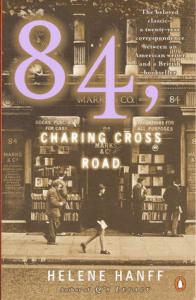
    84, Charing Cross Road by Helene Hanff

    Summary from Goodreads:

    This charming classic, first published in 1970, brings together twenty years of correspondence between Helene Hanff, a freelance writer living in New York City, and a used-book dealer in London. Through the years, though never meeting and separated both geographically and culturally, they share a winsome, sentimental friendship based on their common love for books. Their relationship, captured so acutely in these letters, is one that will grab your heart and not let go.

    I didn’t expect such a short book to have…

    View original post 684 more words

  • Today’s recommendation is not for kids, but for their parents, teachers, and other adults who wish to recommend books, kids will love.  It is a literacy “classic,” Nancy Pearl’s Book Crush (published 2007).

    In the introduction, Pearl states, “I thought it would be fun for me and useful for parents, teachers, and other adults who lived or worked with children; to write a book devoted solely to great reads for kids and teens.”  The book is divided into Part I, “Youngest Readers”; Part II, “Middle Grade Readers, ages 8-12”; and “Part III, Teen Readers, ages 13-18.”

    As she ends the introduction, Pearl adds, “My hope is that you’ll find here hours and hours, days and days of wonderful reading for the child and teens in your life.”

    Here is a sample from the many sections (Adventure, Goosebumps, Good Sports, Girlpower, etc.) aimed at Middle School readers, titled “Guaranteed to Grab You, Memorable First Lines”:

    “I love first lines of books. I can’t imagine a better feeling than opening a book to the first page and coming across a line or two that is so compelling you just can’t stop reading. Here are a few of my favorites.

    Millicent Min, Girl Genius by Lisa Yee begins, “I have been accused of being anal retentive, an over-achiever, and a compulsive perfectionist, like those are bad things.”

    Deborah Wilds starts Each Little Bird That Sings with this come-hither line,  “I come from a family with a lot of dead people.”

    You get the idea, first liners that grab the middle school reader’s attention. I think this was my favorite age group and my favorite section within that group. Grab a copy of the book, be sure to have pencil and paper nearby to make lists, and soon you will be known for your “cool” recommendations. (You’ll also find some interesting books YOU will enjoy, I betcha’!

  • To me, the criteria for a good novel, even one based on fact and rigorously researched like Morris’s Aftermath, is good characterization. Plot, resolution of plot, description, or anything else is not as important to me. Morris’s 2016 novel, the story of the aftermath of the New London School tragedy in New London, Texas, March 18, 1937 could be a novel of great suspense and tragic drama. However, the novel deals with the aftermath of the explosion that killed one-third of the town’s population, almost all of its children and teachers, and affected each household in the community. The following questions were suggested by a fellow blogger to measure how an author dealt with character.

    1. Who was your favorite character? Delys Lithingate, a survivor of the New London School Explosion, was the main character, the protagonist, but as my Third Tuesday Book Club agreed, she was not necessarily a “favorite” character because she had flaws and often acted selfishly, and was even described at a “teenage brat” by one member. (She was booed down by the rest of the members, reminding her of how her aunt intruded on her life and caused “hateful,” selfish thoughts in Delys’s mind.) Most of us agreed Delys was definitely a complex character and was expertly drawn in fairness and honesty by the author.
    2. Who was your favorite secondary character? Here, at the book club, there was agreement–Bruce Buckstrum. He had our complete empathy, reading him as “always second,” first to his brother and sister; then his life took a backseat to his father who went to pieces via alcohol after dealing with the bodies and deaths caused by the explosion. After all, he was the town doctor, and ended up telling parents there was nothing he could do to save their children or gathered up missing parts of bodies for parents to identify. What he went through in the aftermath of the explosion was more than a person could bear, and his son Bruce was stuck for the rest of his father’s life taking care of him and seeing “he got through the day.” We agreed that Bruce was not dumb or slow in school but had so many home duties and responsibilities he couldn’t study or even make the effort to excel in school like Delys did. We agreed that Delys sometimes looked down on Bruce as lesser than she, as “sweet, but not very smart.”
    3. Would you want to follow these characters in the future? We did not discuss this as a group, but personally, I felt the author brought the adult characters together after the war in a fascinating scene, where they had their “moment” together. One member mentioned that it was “convenient” that Bruce had sex with Delys before telling her he was “done” with their relationship. We agreed that although the ending was not, “and they lived happily ever after,” that it was a satisfactory and realistic one. Several argued that Delys was an independent woman, very satisfied with her home, her life, and her position and that she did not need a man in her life–not even Bruce–to make her life complete. Whether this was selfishness or independence, we could not decide.

    4. What about the relationship between the characters in the book? Interestingly enough,      some of us thought that Delys, with all her obsessing and daydreaming over Bruce and their make-out sessions, made up or imagined some of the scenes in the book. We all agreed that Delys’s idealized version of Bruce’s devotion and love for her was probably constructed in her own mind. We never could decide whether Delys actually heard Bruce at the performance of the Scottish Brigade, or if it were her imagination (or willful desire) playing tricks on her. Her response, ignoring and not breaking ranks to respond demonstrated her true feelings toward Bruce and their “relationship.” the fact that she immediately left on a date with another young man reflected her indifference to Bruce and their feelings for each other. Again, it was a complex relationship, involving a complexly-drawn character, and caused the reader to give much thought to how the character had been formed by the tragedy in her life, while reading the novel.

    Several of us had lived in Houston, and one grew up in a town very near New London (Her parents heard the explosion as children), so we were nit-picky about the settings. We all agreed the author had done her research admirably and had obviously traveled to both settings to be as descriptively accurate as she was.

    Overall, we all liked the novel and were glad we had invested our valuable reading time in this novel.  Two of us, however, had read other books by the same author we liked better than this one.

    I’d give this a five out of five stars.

  • This fun meme, begun by The Purple Booker, which I found on Brainfluff, some time ago asks that the reader find a sentence or two at random from something they are reading now and copy those lines, accompanied by the title of the book and the author’s name. The object of this little “game” is to tease other readers to add your book to their TBR lists.

    Mine today is from Beth Revis’s Across the Universe:

    A young woman and her parents are being cyro frozen for travel to Mars. The father has insisted she wait and watch both parents go through the process first, so she can decide whether she wants to go through with it or not. Just as she is being frozen, she has these thoughts, “But if I’m ice, how am I conscious? I was supposed to be asleep. I was supposed to forget about Jason and life on Earth for three hundred and one years. People have been cyro frozen before me, and none of them were conscious. If the mind is frozen, how can it be awake or aware”?

    I am anxious to read further to see if she will be mindful through three hundred years of physical “sleep,” or if things will be different when she awakens if she does sleep.  The book jacket hints that someone has tried to murder her while she slept, but who? and why? Would she have enough consciousness (judging from her speech above) to know who that person was? This book promises a great deal of adventure and an excellent mystery.

  • I have been working on my Advanced Writing class, which begins on August 28th, all morning. Perhaps this is why my thoughts have turned to art. The core of the class will be art majors, so I read Art for Dummies as a crash course in “the basics.” That strategy was only semi-successful because the book is more of a reference book than a textbook on art. However, I did come across this definition of art from Hoving, the former curator of the New York Metropolitan Museum of Art:

    “Art is when anyone in the world takes any sort of material and fashions a statement with it.”  Whoa, that blows my mind. It reminds me that like beauty, “[Art] is in the eye of the beholder.” This was brought home to me by a children’s poem, “The Secret of My Art.”

    The Secret of My Art

    “It’s a beautiful whale,” my teacher declared.

    “This drawing will get a gold star!”

    “It’s a beautiful whale,” my father declared.”

    “Your talent will carry you far!”

    “It’s a beautiful whale,” my mother declared.

    “What a wonderful artist you are!”

    Well, maybe it is a beautiful whale…

    But I was trying to draw a guitar.

    Only the individual artist knows whether their work of “Art” fits the concept of what is considered to be “Art,” and what the exact definition of that concept is. So then, anything is art? From Hoving’s definition, Yes.  Graffiti is art? Give that a definite YES!  Meditations in sand, drawn by Tibetan monks, which last a few minutes, then blow away in the wind? Yes. The definition of “Art” changes from generation to generation and from age to age. Art is in flux, constantly changing, constantly being dissembled and reconstructed. As long as artists and the creative urge continue, the “definition” of Art will change.

  • A book I put in my LFL (Little Free Library) in not-so-gently-used condition, owned at one point by someone who wrote his name, “MATHIS” on the inside cover, has just been returned after being borrowed/taken. Since its  condition showed that boys had actually  read it, I decided to read it myself in order to recommend it to “reluctant readers,” who so often are of the male gender.

    My Life as a Book by Janet Tashjian, complete with “cartoons by Jake Tashjian.” was a fun read as well as a subtle vocabulary builder. Instead of having definitions of challenging words in the margin, it had cartoons illustrating the meanings of the words.

    The book’s opening lines, ” I DON’T WANT TO READ THIS BOOK”! would capture any reader’s attention, especially a male, reluctant one. Mystery occurs in this book as the first-person narrator, Derek, discovers an old newspaper clipping about a teen girl’s drowning off Martha’s Vinyard. What he discovers is not what he or his mother expected, and makes a life-changing difference for him and his family. The author inhabits the mind of Derek well, and the cartoonist expresses a young boy’s impatience, curiosity and thought processes with stick figures and labels.

    It is a great read!

  • Rae Longest's avatarLiteracy and Me

    When Ursula Le Guin died last year, I was reading this 2017 collection of her essays. It is a compilation of er blog posts and other on-line writings, subtitled, “Thinking About What Matters.” Le Guin was well into her eighties, thus the title. Facing my 75th birthday this coming November, I went back to this book, re-reading her delightful essays on Pard, her mischievous cat, who was so strong willed and minded that he put even my Lena to shame.

    I first met Le Guin as the author of Wizard of EarthSea, a sci-fi classic full of strangeness and philosophy, as is any good work of sci-fi. Knowing her ideas about life and death as expressed in her sci-fi stories and novels helped me understand her thoughts on the end days of her life. There were some serious essays on topics like the economy and politics, and the author discusses…

    View original post 104 more words

  • Charles Yallowitz's avatarLegends of Windemere

    Anybody remember the phrase ‘Reading is Fundamental’?  First, I didn’t realize it was a nonprofit child literacy organization founded in 1966.  Thought it was saying used in Public Service Announcements.  In fact, I used to think it was connected to this blast from the past:

    I watched this show religiously as a child.  At least when I wasn’t reading.  I remember my school would do an MS Reading Contest and the winner got a free personal pizza from Pizza Hut.  Several times, I need to get an extra form because I ran out of slots to write down what I read.  Some days, I would have a pile of books and just read through them for the day.  We’re talking elementary age, so there were books like ‘Wayside School is Falling Down’, ‘Encyclopedia Brown’, “Incognito Mosquito’, Choose-Your-Own-Adventures, ‘Bunnicula’, and a ton of nonfiction stuff on animals and dinosaurs.  Many of…

    View original post 525 more words

  • This meme, originally hosted by The Purple Booker asks that readers copy a sentence or two at random from a current read that might tease readers into choosing their book for their TBR list. Here is my Tuesday Teaser (8/13/19) from Amy Harmon’s What the Wind Knows:

    “The wind and the water already know…The wind you hear is the same that has always blown. The rain is the same rain that falls. Over and over, round and round, like a great circle. The wind and the waves have been present since time began.”

    What better way to express how a character travels back in time by setting out in a boat, coming up upon men from another time who shoot her, and nearly drowns before she is rescued and wakes up when her grandfather is a young boy in Ireland. This is definitely a “darned good read.”