RAE’S READS

  • Chasing
  • Writing Is Easy And It Is Hard

    aurorajeanalexander's avatarWriter's Treasure Chest

    Picture courtesy of: http://www.google.com


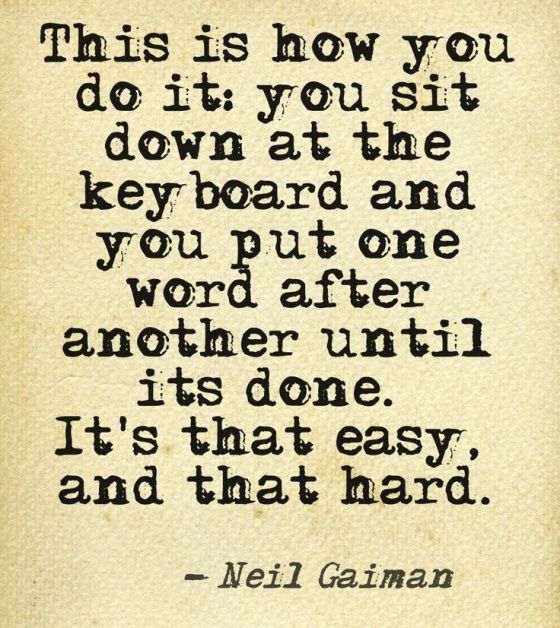
    Neil Gaiman is right. Writing is easy – and it’s hard.

    We writers have a story in our head, and we want it written. That’s what we love doing; the book is what we want to accomplish.

    But there is so much more. The characters, the plot, the genre, the word count, the editing, the cover, the formatting, the copyright, the beta reading, the hope and the fears.

    Many of us, I figure, have the same fears that I have: Is the story as good as I hope it will be? Could I have done better? What does the reader want? What do the readers say? How are the reviews going to be? Is the book the way I wanted it to be? Are my characters the way I imagined them? There are so many more questions my fear, right now, won’t release.

    In many ways…

    View original post 270 more words

  • This fun meme, which I discovered on Carla Loves to Read, an excellent blog, and hosted by Hoarding Books, asks that we copy the first line(s) of what we are reading.

    Mine for Friday, August 31st, is from The Broken Earth series, a trilogy which My Better Half and I are taking turns reading aloud to each other.  We finished The Fifth Season,the first book as our summer reading project and are beginning the second book, The Obelisk Gate. N.K. Jemisin is the author of the trilogy.

    The first lines of The Obelisk Gate:

    “Hmm. No, I’m telling this wrong.

    After all, a person is herself, and others.”

    I can hardly wait for some down time during the Labor Day Holiday this weekend to cover a chapter or two.

    If you would like to participate, (it doesn’t have to be on Friday), post First Lines on your blog. No blog? No problem. Enter your first line(s) in the comments box below this post.


  • curiosities

    Annette Rochelle Aben's avatarAnnette Rochelle Aben

    Trinkets precious all

    Over flowing treasure chest

    Handmade and heart felt

    Memories, bits and pieces

    Uniting past and present

    ©2018 Annette Rochelle Aben

    View original post

  • I have been in a two-person book club for a while; my girlfriend and I call ourselves, “Book Buddies.” We always recommend books to each other,and loan them or give them to each other, then discuss them.  At least once, we have read a book series simultaneously and commented via email and have sent clippings of reviews or interesting snippets concerning movies or TV shows to be made from a book we have read as well. When I heard that this book was about a man and his dying mother forming a two person book club and reading the books together, I was interested, then thought, “Eeeww, another book about dying and loss…no thanks”! In a weak moment after hearing a Third Tuesday Book Club friend had started reading this book, I ordered it from Amazon.

    It is NOT depressing or a “downer” as I feared, but uplifting and even inspiring at times; never maudlin nor graphic in the details of Schwalbe’s mother’s pain and suffering, the memoir/literary criticism/biographical tribute of a book showed me the proper way one should deal with suffering, and ultimately, dying. Mrs. Schwalbe was an educated, intelligent activist, and an altogether “classy” woman. Mother and son’s choices of books were varied and ones I had not encountered myself.  I read with pen and paper at hand to copy down titles and authors. Interestingly enough, they did not avoid books about death and dying, but instead embraced them, which often opened the door for them to have conversations about final wishes, and to say things that are awkward to broach to someone whose life is coming to an end.

    Dealing with themes of mothers and sons, celebration of a life, and celebration of books, End of Your Life expresses Mrs. Schwalbe’s and her son’s “devotion to the printed word.” (Stanley Schiff, author). The simple dedication reads, “What follows is my story. It’s mostly about Mom and me.” We learn much about the woman featured by her son, and much about him as well as he describes the meetings of their two-person book club during her chemo treatments over the period of her illness, and then at home after she discontinues her treatments.  They formed this club to pass the time, but it did so much more; it bonded them in a special way and gave them knowledge about each other neither would have thought to give the other under “normal” circumstances.

    It is a fine read. I was able to put it down and pick it up again some time later without losing the “thread” of the story or the appreciation of the two’s appreciation for good writing and passion for books.

  • In the late seventies, early eighties, I was teaching Language Arts to sixth graders in an elementary school. It was here that I first encountered The Lion, The Witch, and The Wardrobe by C. S. Lewis. The end of the school year was looming, and the endless hours filling in and averaging grades for each student’s permanent record lay ahead. This all had to be done at school, for teachers were not allowed to take such documents home. Patty, the teacher next door, a friend from AAUW, and who had taught with My Better Half at the high school, was trying to make the excessive, hand-done paperwork required at the elementary level a bit easier. She suggested that we record on her personal Beta-max (google it!) C.S. Lewis’ classic which would be on public television(PBS) the following Sunday, then show it to our two classes together while one of us watched the two classes, and the other could retire to the library to work on permanent folders in peace and quiet. It was a good plan, and it worked well.

    What astonished me was the kids’ reaction to the story. After the two-hour presentation, I took my class back to my room and held an impromptu discussion of the story they’d seen. I had caught the symbolism and allegory presented in the classic tale, but did not expect eleven and twelve year-olds to do so. “What is this story about?” I asked. “Easter!” two of the students shouted. What followed was a sixth-grade explanation of allegory, symbol, and What makes a “classic”, a “classic”? I enjoyed the film so much that I read it and then completed the six volumes that followed in the series.

    Imagine my surprise when after seven years of sixth grade language arts, and enrolling in graduate school, I discovered C.S. Lewis as a renowned literature critic, and as I read his remarks on books I was using in my papers, I also began to read more and more about him, his friendship with Tolkien and their elite circle of literary friends at Oxford.

    I began teaching a Sunday School class about the time I started graduate school, and in researching my lessons, ran into Lewis again as a religious writer. My couples class, which was labeled “seventy to heaven” as its age group, loved hearing readings from The Screwtape Letters and especially some of the more serious essays, and we had some delightful discussions prompted by them.

    One last encounter with Lewis came when I found a copy of his biography, The Narnian by Alan Jacob at Half Price Books (in hardback). It was an insightful read and a thorough biography, which also included a discussion of his best known series, The Chronicles of Narnia.

    This essay fulfills my attempt to participate in the August Children’s Book Marathon, hosted by Jay, at “This Is My Truth Now.” Check out his delightful blog and enjoy his fine novels, Watching Glass Shatter and Father Figure. Both are reviewed on PWR.  Just type in the title and read how much I enjoyed reading them.

  • Because I was born during WWII, I did not read Charlotte’s Web as a child, or at least that’s the excuse I offer. My first encounter with the title was during the first year of my teaching, 1967. I was teaching seventh grade in a junior high setting, and in class I had asked the kids what was the best book they’d ever read.  Unanimously, they agreed on Charlotte’s Web. Making little sense of their explanations that it was about a pig, a spider, and a girl and how the girl saved the pig with the help of the spider and the spider died. They were all taking at once in crazy run-on sentences, and I was totally unimpressed. That same afternoon, when I went to pick up My Better Half, who was starting his first year of teaching math at a nearby junior high in the same district, he asked me to “work on something” and let him finish a set of quizzes. I sat down in a student desk and discovered a copy of Charlotte’s Web that had been left in the desk. Call it serendipity; call it coincidence. I settled in, and began to read.

    It was indeed what the children said, and so, so much more.  It was a story of friendship, loyalty, and of dealing with death. Later, it was often on my Top Ten bulletin board list during the next ten years when I taught seventh grade for Alvin (Texas) Independent School District.

    I also had a “relationship” with Charlotte’s author, E.B. White. Because there was no Google my first year to teach, I never realized that our composition handbook’s author was the same. My very first class of seventh graders used White’s Elements of  Style almost every day without ever realizing who he was.

    When I began teaching at the university where I teach now, I used Elements as a required textbook. I still refer to him and read from his text in my Advanced Writing classes.  Sadly, I no longer require the students to read from it because they complain about the “big words” and “stilted phrases” White uses (their words) and struggle to read it–sadly the same text the seventh graders of 1967 read, discussed, and asked questions about when it was too “hard” for them.

    Sometime after 2014 when I started this blog (PWR), I came across a biography of White in Half Price Books, and enjoyed it so much I wrote a post reviewing it. It is The Story of Charlotte’s Web by Michael Sims. To read my review of it, type the title into the search box at the top or look it up by date, July 1, 2016. It will give you a pretty accurate idea of what the book covers.

    I realize this is a personal history and not a review, as requested by Jay at “This Is My Truth Now” for his August Children’s Marathon, but the beginning of school is here, and this is what I have to offer today.

    If you haven’t read Charlotte’s Web, read Jay’s review of it and get to know Charlotte and Wilbur. Warning: Keep a box of tissues nearby.

  • bridget whelan's avatarBRIDGET WHELAN writer

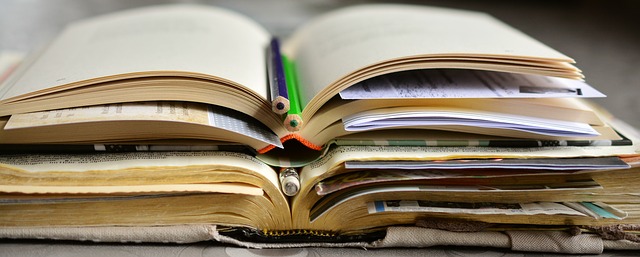
    books-2158737_640
    It is okay to dog ear pages. It is okay to draw in books. Doodles. Margin notes. Highlights. Books are to be interacted with, argued with, marked, loved. A book belongs to the reader as much as the writer. The reader should let the book know they exist.
    Matt Haig

    View original post