RAE’S READS

  • This unusual/weird novel is set in the near future and goes forward from there. Patricia Delfine and Laurence (“without a ‘w’ “) Armstead, the two protagonists meet in junior high.  They both are misfits among their peers–he, because he is working on an AI computer assembled in his bedroom closet and has invented a time machine that can move one two seconds in time; and she,  because she can talk to birds and other animals and is branded as a witch by her classmates. These two unusual, unlikely “friends” unite against strange antagonists and typical middle school harassment.

    This book is science fiction which explores the themes of magic vs technology, the fate of planet Earth, and the complexities of friendship. As the cover asks, “Will they find love? Will they save the world? or, Will they destroy it?” The book is further described as “…wacky, sexy, scary, weird, and wonderful…” I found the novel to be all of the forementioned. As I read the book (and it didn’t help that I was reading it during the craziness of Hurricane Harvey) I wondered if both kids or their guidance counselor, or I, the reader, was crazy.  Many times I expected the author to end with an explosion of the planet and then the seventh graders’ denouement of, “And, then I woke up from my dream.” The author had in mind a much more complex yet satisfying ending. I would rate it five stars out of five stars and pay my compliments to the author.

  • Jenna Zark’s (author of A Body of Water) 2013 publication taught me more about the Beat Generation, Beatniks of the 1950s, and especially about “Beat Poetry” than I learned in an undergraduate class on Modern Poetry, which explored the subject. It is a fine book told from the point of Ruby, an eleven-going-on-twelve year old girl who lives in The Village in New York. She seems to be a “typical”pre-teen who has a “typical” cat, Solange.  Her mother, Nell, aka “Little Nell” is an artist, and her father, Gerard, aka “Gary-Daddy-O” is often on the road, playing bass. As Ruby tells us about The Beat Generation, “When it first  started, it was about people who were” beat up and fed up by the”System”, aka “The Man.”  Ruby had been making up poems by age four and writing them down by age seven. Her idol is Jack Kerouac, whom she describes is “…not a poet but writes like one.”

    Ruby has a fourteen year old brother,Ray, who plays sax and often substitutes with his dad’s band, earning the adults’ respect and admiration for his playing skills. When Ruby gets in trouble on the “street,” she is sent to the police station, and Mrs. Levitt, a social worker steps in, setting in motion an investigation into her unmarried parents and her “home environment.” What follows in the story leads to Ruby becoming involved in a hunger strike at a children’s home in Brooklyn, where she is aided and abetted by her new friend, Manuela.

    As she approaches her twelfth birthday day, she could never have imagined the changes in her life, attitude, and maturity or how things could change so quickly.  Through it all, she has her poetry (quite good, and interspersed throughout the novel) to sustain her and comes to the conclusion that “Poetry isn’t really good for anything except it makes you feel better.” Although the book explores the angst of “typical teen” misunderstanding and feelings that friends (and parents) don’t understand, Ruby, street-smart and talented,   is NOT a typical teen in a time and era definitely not “typical” either.

    The author supplies questions for discussions suitable for book clubs, junior high English and history classes and anyone interested in the literary contributions to American literature from the “Beat Poets/Generation.”

  • qwietpleez's avatarThe Qwiet Muse

    IMG_2057

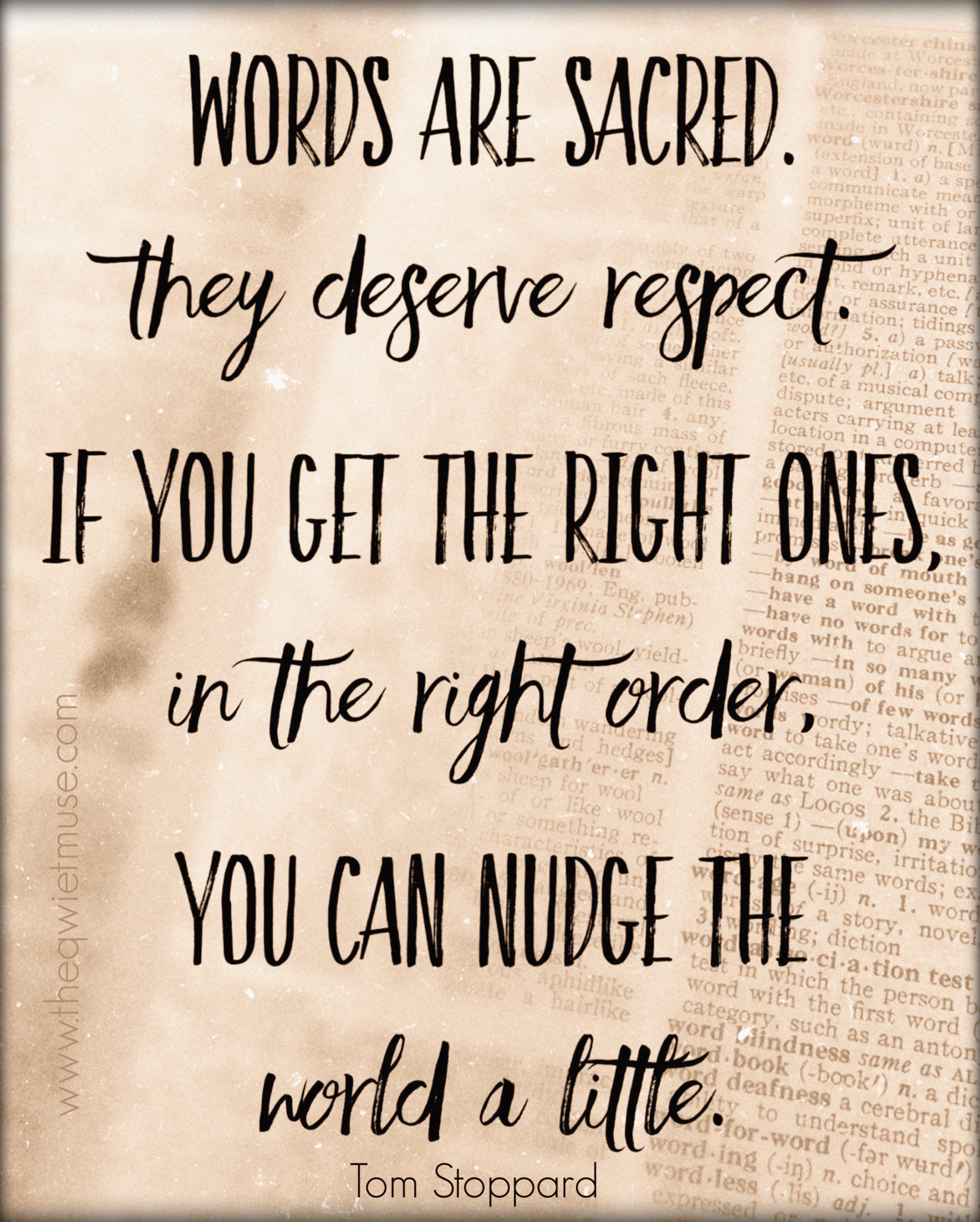
    “Sticks and stones may break my bones,
    but words can never hurt me.”
    Oh, my precious soul,
    but they can
    and they do.
    Words cut.
    Words sting.
    They echo
    in hearts and minds.
    Those sticks and stones
    may bruise you, yes,
    but bruises fade.
    Scars of the flesh can heal.
    Broken bones renew.
    Words though,
    sharp enough to etch
    a mark upon the heart
    fester and grow,
    inflicting pain
    long after
    they are spoken.
    Words become weapons
    when wielded
    without care.
    But hope, too,
    resides within them.
    Words can heal,
    mend what others
    have broken.
    Used as a shield, deflecting
    spoken daggers aimed
    at the heart.
    Words, the right words,
    can fell foes
    and lift the fallen.
    Choose them, precious soul,
    choose them with
    thoughtful intention.
    Command them
    with honor,
    respect the power
    they hold
    and you will
    find strength
    within them.
    Choose them wisely,
    precious soul,
    and use…

    View original post 8 more words

  • The dangers of complaining too much…
  • Lisa Ko’s 2017 novel, winner of the PEN/Bellwether Prize for fiction awarded by Barbara Kingsolver (for a novel that addresses issues of social justice) is an excellent novel. It is the story of Deming Guo, aka Daniel Wilkinson. The title indicates that everyone in his life leaves, or he leaves other people.  It is an intricate story of “love and loyalty.”

    As the story begins, we find Deming with his immigrant mother, Polly, who works in a nail salon struggling to survive in The Bronx. One day Polly does not come home from work, and her boyfriend and his sister, Vivian, the mother’s roommates are not sure what  to do with the ten year old.  Deming, of course, wonders why his mother left him, then soon, why Vivian left him with social services who allowed the Wilkinsons, a middle-aged, white couple who are professors in upstate New York to adopt him.

    This is not just an immigrant story, but a mystery that has many surprises along the reader’s journey through the novel. The book deals with expectations: parental expectations ; middle-class expectations, from both biological and adoptive parents; and  Deming’s own expectations from life.  Because of the last, he (Daniel) becomes a slacker, somewhat directionless and lacking purpose. The writer’s point of view alternates between Deming’s and Polly’s, spinning out extraordinary  lives of both main characters. There are happy moments and sad ones as well.  The setting spans the globe, presenting “one of the most engaging, deeply probing, and beautiful books I have read.” (Laila Lalami, author).  I agree.

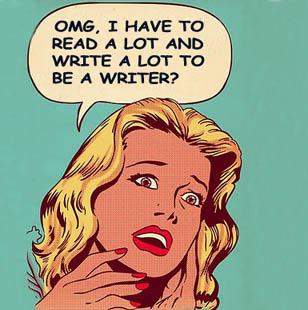
  • 3 Memes especially for Authors…
  • I finished this book nearly a month ago, but summer school and its fast pace prevented me from reviewing it until now.  I wanted to do it justice because the author is a friend, and she has written a really fine novel.

    When one hears the address, The Dakota (an apartment building, now a building of condos) in New York, one’s mind automatically goes to John Lennon’s murder, but the story goes back much further than that, to the 1800’s to another infamous murder at that address. Davis has thoroughly done her research on the building (Her novels are set in buildings in New York), and discovered that the architect was stabbed to death, supposedly by a crazy woman of that day. She has envisioned how it could have been and written a very plausible story explaining her vision.

    A blurb on the book describes it as “…about the thin line between love and loss, success and ruin, passion and madness.”  In the novel, Theodore Camden was found stabbed to death, presumably by Sarah Smith, his lover. That is the 1800’s story.  The 1985 story finds Bailey Camden (notice the name) an out of work recovering alcoholic just returning from rehab, who is  forced to throw herself on the mercy of Melinda, her vacuous cousin for a job and a place to live.  The job, at the Dakota, which includes an apartment, as what seems to be her only salary, develops into an interest in (bordering on obsession with) the building. I have never read such twists and turns as were in both Sarah’s 1884 story and Bailey’s 1985 investigation into her ancestor’s murder.

    As in Davis’ debut novel, The Dollhouse, about the Barbizon hotel, the novel alternates between the early story and the more modern one.  This never confuses the reader, however, for chapters in both novels are clearly marked with dates. Also like The Dollhouse, Davis’ newest is a historical romance story, involves a crime of passion, and has several mysteries to solve. The opening of The Address, begins arrestingly: “The sight of a child teetering on the window ledge of room 510 turned Sarah’s world upside down.” Thus begins a tale that kept me up far past my bedtime because I couldn’t put it down. Dishes and laundry went unwashed, social activities were put on hold, and telephone calls went unanswered during my two-day immersion in The Address. The author’s inclusion of the details of the period were reminiscent of those taken by the creators of “Downton Abbey.”

    I am so looking forward to Davis’ next novel, which I have on her mother’s word, is set in Grand Central Station. To all people who love all things New York and any reader who enjoys a good read, I highly recommend this book.

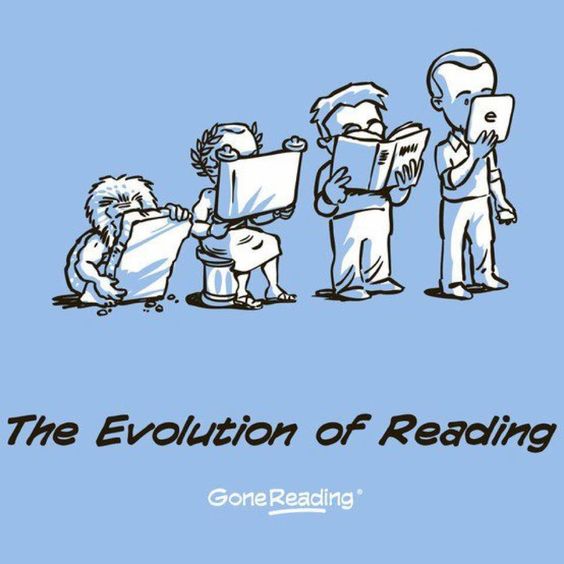
  • The Evolution of Reading Meme…