RAE’S READS

  • I did not take on too many challenges back in January for this year, and that strategy has paid off. Here is an update on what I have accomplished and what is left to do by December 31st.

    Challenge #1 “What’s in a Name” was the shortest, requiring only 6 books, and it was finished in August ’22.

    Challenge #2 is not going very well. I had decided to read a classic every other month starting in January until December.
    So far, I have read Brideshead Revisited, I Capture the Castle, The Wind in the Willows, and am currently reading Leafy Rivers to count for the months of July and August, so I am two books behind. However I am sure I can read two more classics before December 31st.


    Challenge #3 Twenty-two Novels in 2022

    I finished this one early and am now at 31 novels for this year.
    Challenge #4 Twenty-two Nonfction Books in 2022

    I also finished this challenge at the beginning of fall. I am currently at 27 non-fiction books for the year, which is surely a record for me.
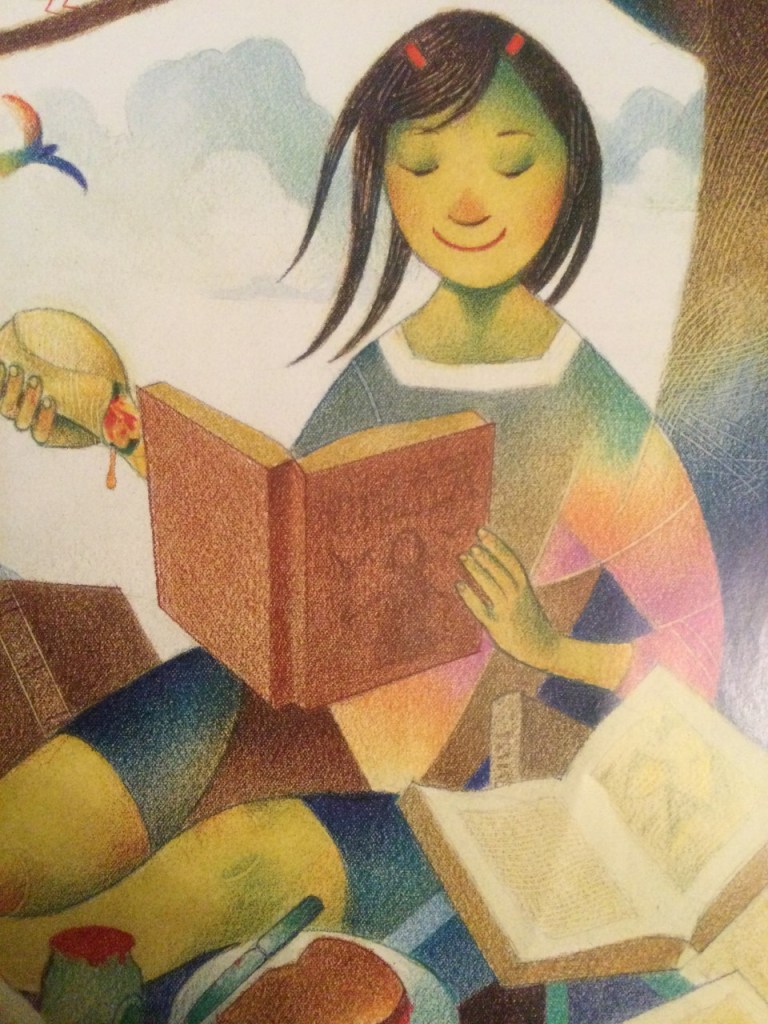
    WHAT SHOULD I READ NEXT?

    I decided not to do Non-Fiction in November, as I did last year and am thinking of doing Novellas in November. However, before I take on another challenge, I have to decide what defines a novella and how many would I plan to read?

    If you have suggestions, please leave them in the comments box.

    THANKS!
  • Thanks to the blog Reading Is My Superpower for hosting this meme and allowing me to borrow their image.

    My Friday Firstliner for October 28th is as follows:

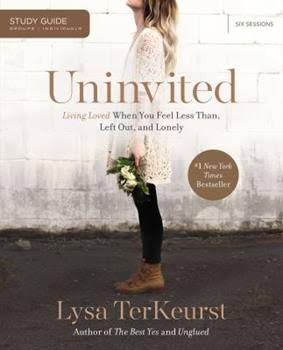
    “In the quiet of early morning, honesty finds me. It calls to me through a crack in my soul and invites me to come out, come out wherever you are.”

    These are the first two sentences of…

    This is an inspiring, healing book. Subtitled “Living Loved When You Feel Less- Than, Left Out, and Lonely”speaks to women everywhere. The first chapter, “I’d Rather Ignore Honesty” explains it all. I have read the first third of the book.

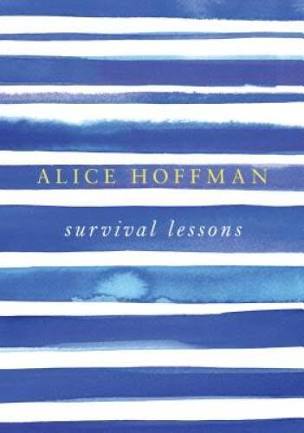
  • Because I am so busy getting Rae’s Reads (my bookstore) ready to open, I am only having brief periods of time several times a day to read. This does not lend itself to reading novels, so I picked up a collection of short essays by Alice Hoffman at my local library. It is a small book, but it is full of poignant, warm essays. It is Hoffman’s journey through breast cancer to survivorship. Having made this journey myself 23 years ago, the volume spoke to me.

    This collection contains a guide for surviving breast cancer.

    Published in 2013, Alice Hoffman, “one of America’s most beloved writers,” addresses an issue that affects millions of women. It is “gentle, but wry”; it helps us “[find] beauty in the world even during the toughest times.” Each essay helps us …”choose what matters most,” and deals with” Choosing your Heroes,” through “Choose love,” to the concluding essay, “Choose the Evidence.” Compiled, the essays give us “ways to re-envision everything–from relationships with friends and family to the way you see your self.” One of the most helpful essays was “Choose to Plan for the Future.” In it, Hoffman instructs us to “Write your troubles on a slip of paper and burn it. Now make a list of what you need to do next year in your life.” This is good advice for anyone who is not sure she/he is going to have a next year. It assumes they will be a survivor.

  • This is a story written by my third grade friend and neighbor , Sadie H.

    The Creepy Eyeball

    Characters: Sadie, aka “Starlight”

    Rae, aka “Moon”

    Once there was Moon and Starlight. Strarlight drew an all-seeing eye on Moon’s whiteboard. They didn’t know that it would come to life. One day, they were looking at the whiteboard, and the eye was no longer there. They looked all over Moon’s house for the eyeball, and finally after much searching, they found the eyeball in Moon’s closet. THE EYEBALL WAS ALIVE!

    The eyeball had become two feet from upper lid to bottom lid and three feet across from corner to corner. Moon wondered how it had traveled from the whiteboard to the closet. It had no legs. Starlight pointed out that it had probably rolled. They set up a video camera to see where it moved next. On the camera, they saw it go under Moon’s king-sized bed, so they knelt down and looked under the bed. It was gone!

    Starlight said to Moon, “Where did it go?” Moon said, I don’t know–beats me!” Finally, they went to the kitchen and turned on the oven to make their lunch. It was then they saw the eyeball cooking in the oven! They decided to leave the eyeball in the oven to die.

    Stay tuned to the next chapter…

    THE END

    HAPPY HALLOWEEN, AND HAPPY READING

    SADIE

  • JUST LIKE TV PROGRAMMING IN THE 50s AND 60s, PWR CATERS TO KIDS ON SATURDAY MORNINGS

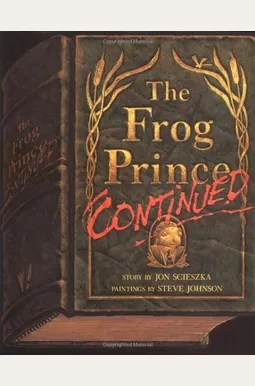
    A SILLY BUT ATTITUDE-CHANGING TAKE ON “THE FROG PRINCE”

    This book picks up where the story of the Frog Prince left off. The first page shows the princess and the handsome (ok his legs and tongue are unusually elongated) Frog Prince and the last lines of the old story,

    “The princess kissed the frog. He turned into a prince. And they lived happily ever after…”

    Turn the page and you read, “Well, let’s just say they lived sort of happily for a long time. Okay, so they weren’t so happy. In fact they were miserable.

    The book traces the Frog Prince’s attempts to be turned back into a frog so he could live happily ever after. He meets several witches from other fairy tales, whom he asks to cast a spell, but in each encounter, he discovers they have a hidden agenda. The witch from Hansel and Gretel wants to eat him, for example. Finally the fairy godmother from Cinderella casts a spell on him that doesn’t turn out happily ever after. The frog prince goes through an “attitude adjustment” that teaches a life lesson to kids that you need to be content with what you have and keep a positive, grateful attitude. The surprise ending is the ultimate touch, and the illustration for the last page is priceless.

    I highly recommend this book.

  • Rae Longest's avatarblogging807

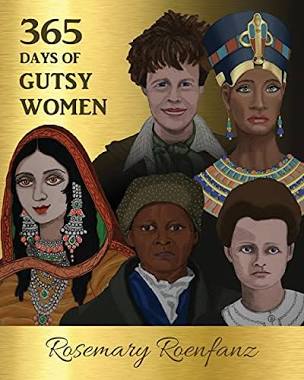
    I have been reading from this amazing book day by day as a secular devotional book. The author sent it to me, asking me to review it on PWR. I gladly accepted and did so. Today’s entry featured a gutsy woman whose name did not ring any bells for me, so I learned a great deal from reading about her.

    LUCY CRAFT LANEY, who lived from 1845-1933, “…founded the first school for Black children in Agusta, Georgia in 1833.” As “…an educator and Civil Rights activist, Lucy was active… in the NAACP,” as well as the National Association of Colored Women. Lucy was born during slavery, but to free parents who valued education. The rights she fought for and the impact she had on Black children and their families was established through her teaching and from the school she founded.

    She is quoted as saying, “The general plot of life…

    View original post 36 more words

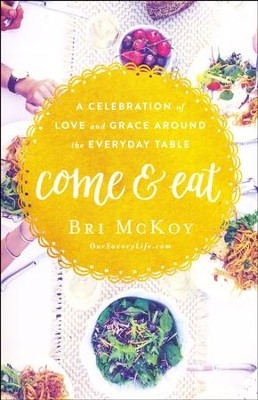
  • Lately, I have been interested in one of the Gifts of the Holy Spirit, that of Hospitality. McKay’s both inspirational and practical cookbook/collection of essays, published in 2017, was included in a box of donated books. I am so glad I decided to “look at” this book, for I read every page, often copying recipes.

    A delightful culinary book for anyone who wants to express their gifts of hospitality

    The author invites us to “Come with your brokenness, your celebration, and your worries, but most of all, come and eat. In our busy, shallow world, we often seek for something deeper. The author teaches us by examples from her own life to find it at our table.

    Whether our table is bountiful or has meagre offerings, we must share what we have. The book has recipes, tips, quotes, and questions to start conversations around our tables. McKay stresses fellowship– fellowship centered around food. She encourages us to make room for others at our tables and to make room at our tables for God. From shopping lists to coordinate with recipes to a 21 day plan for adventures around your family’s table, the book offers something for everyone.

    A blessing on all my PWR readers

    Thanks, Evin, for the sign in.
  • hanks, Carla, for the lovely illustration.

    This is going to be a post without pictures, with the exception of the picture above. because it is about a book without pictures. The Book With No Pictures by B.J. Novak (and, no, there will be no picture of the cover; this is a post without pictures, remember ? ) is a white book with its title written on it in black–that’s it! No pictures!

    The first page has just these words, “This is a book with no pictures.” /Second page, just the words, “It may seem like no fun to have someone read you a book with no pictures.”/ Third page: It probably seems boring and serious. Down at the bottom of the page, “Except…”/ Next page: “Here is how books work: Everything the words say, the person reading the book has to say.”Following page: “No matter what.” / Following page: “That’s the deal. That’s the rule.” Skip down, down, “So that means…Even if the words say…”/ New Page: Red, capital letters–“BLORK”–comment at bottom of page, “Wait–what?/ The doesn’t even mean anything.”/ New page: Blue capital letters–“BLuuRF”–Below that,”Wait a second–what?! This isn’t the kind of a book I wanted to read! And I have to say every word this book says?…Uh-oh…”/ Next page: “I am a monkey who taught myself to read.” Down, down…Hey! I’m not a monkey!”

    This silliness continues through the book until the person reading to the kid is saying he/she is a robot monkey and his head is made of blueberry pizza, and is making all kinds of noises, guaranteed to put the kid in a silly mood and guaranteed to elicit lots of giggles and guffaws.

    It is a fun, fun book. What parent or grandparent is not willing to make a fool of himself/herself to make a kid laugh?

    No picture Sign Off,

    RAE

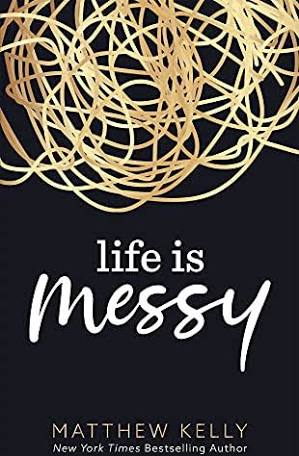
  • I have been reading so many novels lately that I turned to this little book that was donated to my Little Free Library as a change of pace. I do not read as much non-fiction as I should, but I have improved over the years to a fan of good non-fiction writing.

    The author assures us that just because our lives are MESSY, we aren’t doing it wrong. He states that there is no way to prevent the messiness of life. “It’s what we do with the mess that determines everything.” He points out that “You don’t have to have it all together. Nobody has it all together.” In this book, Kelly helps the reader accept the mess. He even goes so far as to say, “…the radical acceptance of self, others and life may be the beginning of wisdom.”

    We are wounded and broken, but that’s ok. Kelly even suggests that we could be put back together in a way that makes us more beautiful than before. He brings to mind the Japanese concept of Kitsug, where artists fill in the cracks and flaws of art objects with gold, making them more beautiful than the original. “We are each others wounded healers, ” he writes. Kelly grapples with his own messiness in his life and shows his findings from the struggle. Dealing with the question, “Will the hurt ever stop?” Kelly gives aid and comfort to his readers dealing with daily struggles and issues.

    I found several things/sections to share with my students (ranging from 21-45 years of age), very applicable to writing and even some life lessons learned by the author. This is a very helpful book.

  • Rae Longest's avatarLiteracy and Me

    For the second time in my years of teaching Advanced Writing, I am requiring my students to read and review a memoir. Supposedly, this reinforces what they learned in Composition Two about writing reviews. Secretly, however, I have done this because I discovered some students had never read a whole book all the way through! Shocking, right? These students are juniors and seniors at a university. We discuss the difference between a memoir and an autobiography and the other time I required a memoir, I had them write one about themselves. I will never do that again. What I learned about my students was not off-putting, but the emotional baggage of what they revealed about things and situations that they had experienced in their short lives (most are between 21 and 30 years old) crippled my objectivity at grading their papers and making decisions teachers have to make about their…

    View original post 295 more words