
RAE’S READS

  • April 2022 is National Poetry Month. Let’s Celebrate!

    Here is a cinquain I wrote many years ago to show my seventh graders what a chinquapin is:

    Books

    creased, dog-eared

    teaching, telling, transporting

    exciting worlds of adventure

    Books.

    My love affair with books began at an early age. I remember my British grandmother, my long-distance grandmother, sending me my first Alphabet Book when I began first grade. She also sent a children’s book, a chapter book, we would call it today, about a naughty cat named Nicholas Thomas, who was always getting into trouble. The story I remember still was about two spoiled Siamese twins invited to tea. They tore up the parlor and blamed it on Nicholas Thomas. When Nicholas Thomas was asked what he wanted for tea, he mentioned tarts, pie, jam, biscuits, etc., eyes widening as he drooled over the sumptuous tea cart, only to be frowned at by his mother. When the twins were asked what they wanted, the replied, “Bread and butter, purr-lease.” I remember seeing that word, hyphenated in just that way, spelled out on the page. It was my favorite book for years, long after I could read it to myself. That book written for the nursery occupants, presumably British children, began my current love for books and cats.

    Here’s another cinquain I wrote for my students:

    Felines

    silky, slinky

    stalking, sneaking, posing

    know how to relax

    Cats.

    In a cinquain, the first line gives a one word title. The second line describes the title in two words. The third line uses three action words to tell about the title. The fourth line gives feelings about the title in four words. The fifth line is another, single word for the title, a synonym. (or it can repeat the title word.)

    HOW ABOUT TRYING YOUR HAND AT A CINQUAIN FOR NATIONAL POETRY MONTH. Provide the URL for your blog where you post it, or write it in the comments/reply box below.
    RAE
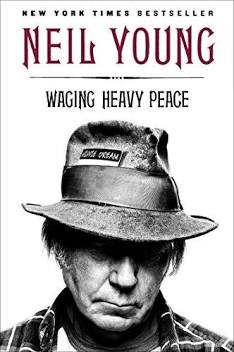
  • At one time, I was very “into” memoirs. In fact, one semester , I had my students do a “memoir project” as part of their course requirements, reading then reviewing a memoir. The students actually enjoyed this assignment, and the culminating memoir they wrote from their own life was very interesting, and in some cases inspiring. One would not necessarily use “inspiring” as a term for the heavy rock n’ roll legend Neil Young, but his memoir was one that was revealing, an indicator of the glory days of rock n’ roll, and even uplifting at moments.

    Hard-singing, hard-playing, hard-living Neil Young’s music was the last thing from my mind as an uptight, judgmental, hard-working, low-paid, “green” teacher of the seventh and eighth grade kids who appreciated his sound. I remember them talking about Buffalo Springfield and their special albums that only teenagers understood.

    An honest assessment of his life by a legend in his time.

    The 2012 hardback showed up in a box of “donations” left on my back porch for my LFL (Little Free Library). Picking it out as an “I might like to look at this one” volume, I placed it on my TBR shelf and finally began to read it last week. I had planned to scan it, to skim through it, but I was caught up in the honest, no-holds-barred writing of the author. He wrote of events and performances I vaguely was aware of during the 70s, but it was a “whole other world” that had no place or meaning in my life at the time. I googled many of the groups, performers, and songs mentioned in this fairly thick tome, and I received a basic outline/education of rock n’ roll in its heyday.

    To give an example of the good writing in this book, I turn to chapter 64: “Walking in the forest for me is like going to church. It is my cathedral…” Contrasting this with the exciting highs of causing along at 45 miles per hour listening to music, wondering if the cop you see will figure out you are high on cocaine as you drive, the author describes the many tickets and arrests the group received, which are balanced by the many times they “outsmarted” or outran the cops pursuing them. Many of his contemporaries of the 70s’ names were dropped, and the stories and collaborations about and with them were interesting. The actual cutting of albums, the way they happened, what happened during the recordings, and the last minute changes and substitutions to original plans were nothing short of fascinating.

    Young was inducted into the R & R Hall of Fame in 1995 as a solo artist and again in 1997 as a member of Buffalo Springfield. Other groups he recorded with include Crosby Stills and Nash , Crazy Horse, and others.

    Toward the end is a description of where he is when the book is published: “I have been clean now for seven years. That is a good, long time. I still feel cravings. Maybe I’d like a beer, maybe a joint…I haven’t written a song in more than half a year, and that is difficult for me…I always wrote when I was high before.” He has lived out his latter years quietly on The Broken Arrow Ranch involved in such philanthropic efforts as Farm Aid and The Bridge, a special school for special individuals with special needs.

    NEIL YOUNG’S MEMOIR TURNED OUT TO BE A DARNED GOOD READ.

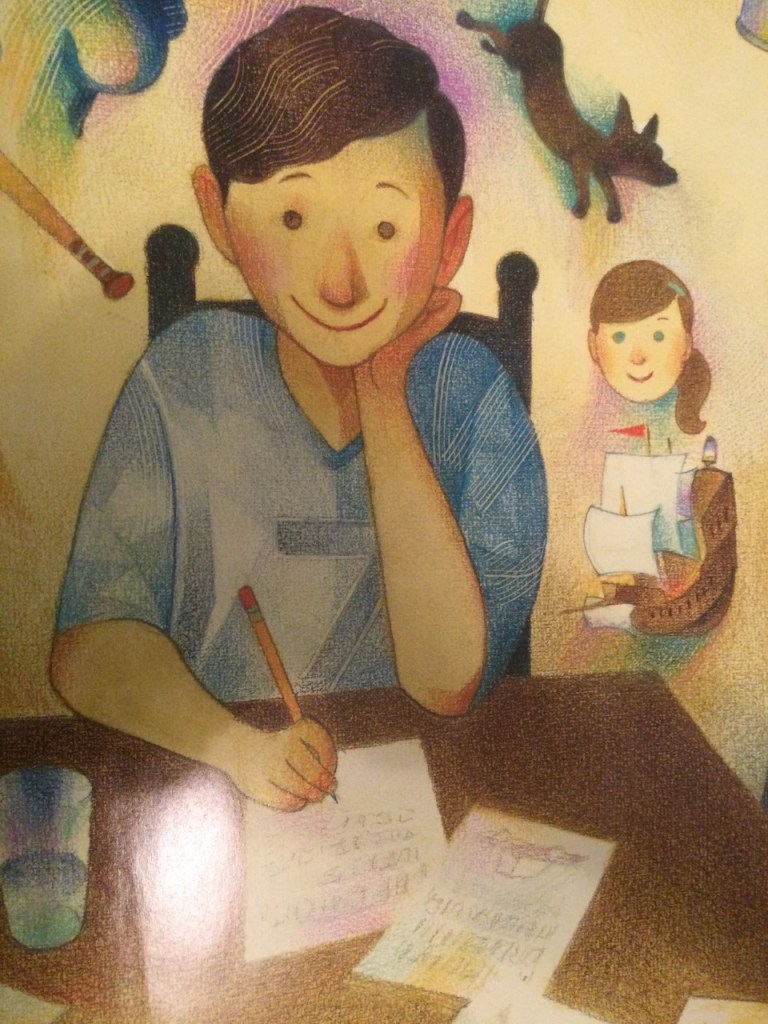
  • Thanks, Carla for the fine illustration.

    AGAIN, I’m late, but today is because I’ve been enjoying my out-of-town company and taking some time out to do fun shopping. Saturdays on PWR are like the TV programming on 50’s and 60’s Saturday mornings, reserved for the kiddos.

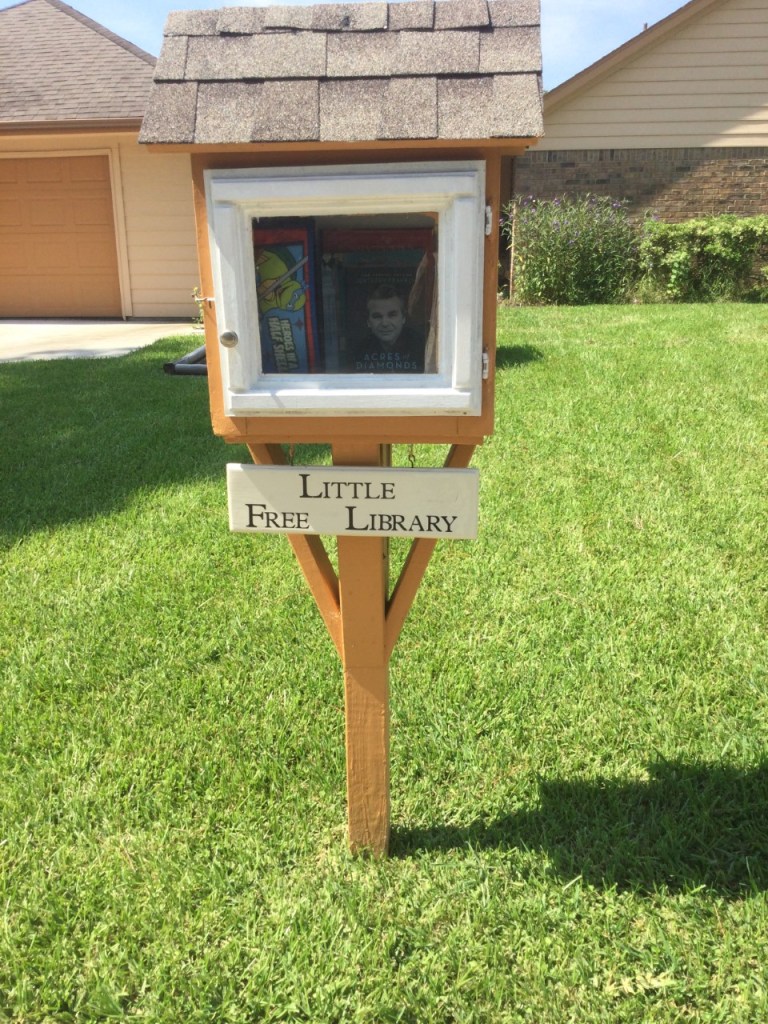
    Today’s book is not something I’ve read, but something that showed up in my LFL that I want to read soon.

    My LFL (Little Free Library) in my side yard.

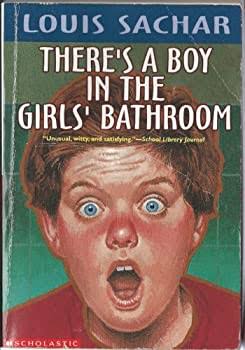
    This 1987 publication by Louis Sachar, described by School Library Journal as “unusual, witty, and satisfying” had me at the cover–

    Louis Sachar is a fine writer.

    This cover reminds me so much of the sixth grade boys I taught “back in the day” in my first teaching career. I remember the boy who wanted to “look in the girls’ bathroom” so badly that he removed the cover off the vent in the boys’ bathroom, crawled into the ceiling crawl space, and fell through, landing in a classroom in another “pod” when he explored the school from above. I am sure this is going to be a fun read.

    RAE

  • Withered Homes

    Deepthy's avatarRandom Specific Thoughts

    War is what happens when language fails.
    Margaret Atwood

    Tokens of an era that flew past us, plague these desolate streets. There are posters from political campaigns, advertisements for miracle pills and the odd ‘For hire‘ poster in neon yellow. No one roams these streets anymore, save for the occasional bus commuting passengers, lost in realms of their own making.

    People change, and their interests and thoughts do too. For some, however, they simply lose sight of humanity.

    The streets are lined with houses, dwelling places once called homes by strangers tothisworld they find themselves in. Faded paint and odd paraphernalia are all that remain, hinting at erased lives and untold fables.

    It must be a painful phase – having to grow out of home, instead of growing up in one.

    So many memories and stories, all rendered obsolete by a singular moment of impulsive…

    View original post 300 more words

  • I took on the challenge of reading a classic every two months. So far, I have remained up to date with this undertaking.

    I began the book, I Capture the Castle twice. I really was intrigued by the cover and blurbs for this novel, but I had a hard time keeping interested. Finally, I gave up and watched the movie instead.

    This is a delightful film and best watched rather than read.

    Dodie Smith wrote a fine novel, but the 2003 film allowed me to finish the story of a highly eccentric family set in 1930s England. The film narrates the story of the Mortmains, a family of kooky characters struggling to survive in a decaying castle in England. Romola Garai plays Cassandra Mortmain, the protagonist, while Bill Nightly gives an outstanding performance as the father, a washed-up author struggling with writer’s block. The beautiful Rose Bryne plays Cassandra’s sister who is intent on “landing” a titled husband to bring the family out of its ruined financial state.

    The comedic film deals with communication conflict both among the family members and the romantic relationships of the two oldest sisters. Roger Ebert, the Chicago Sun film critic gave the film 3 1/2 stars, describes the Mortmains as the tale of “a sublimely impractical family given to dramatic outbursts, ” who are “behind on the rent, short on food money [who are becoming] increasingly desperate.”

    When the sons and heirs of the castle arrive on the scene and find the family squatting in the castle, the fun begins. This film does have brief scenes of nudity, but otherwise, it is a family film.

  • THANKS TO CARRIE AT “REEADIN IS MY SUPER POWER” for the idea and the lovely meme.

    Today’s First Line Friday offering comes from Annie Proulx’s Accordion Crimes:

    ” The Instrument

    It was as if his eye were an ear and a crackle went through each time he shot a look at the accordion.”

    Typical, beautiful prose from the pen of the author of The Shipping News, Annie Proulx.

    Thanks, Evin for the great sign off meme.
  • Poems can be about anything. Here is a poem by William Stafford about the joys of journaling.

    “KEEPING A JOURNAL” by William Stafford

    “At night it was easy for me with my little candle

    to sit late recording what happened that day, Sometimes

    rain breathing in from the dark would begin softly

    across the roof and them drum wildly for attention .

    The candle flame would hunger after each wafting

    of air. My pen inscribed thin shadows that leaned

    forward and hurried their lines along the wall.

    More important than what was recorded, these evenings

    deepened my life; they framed every event

    or thought and placed it with care by the others.

    As time went on, that scribbled wall–even if

    it stayed blank– became where everything

    recognized itself and passed into meaning.”

    (Note: “William (or Bill) Stafford stayed faithful to his journals and diaries over the years, urging friends, family members, and students to keep a record of their thoughts. The thoughts cherished and saved in ink often then took shape as poems on a later date, when the experiences ripened well enough to attach themselves to words.”

    Start a journal this month in order to record your thoughts and experiences. Who knows what form they may finally take–a poem, perhaps?
  • We celebrated poetry in my Advanced Writing Class Wednesday. Thirteen of the twenty-two students were in attendance, and we spent the better part of the class discussing synonym poems, limericks, and a unique book of poems titled, Consider the Lemming by Jeanne Steig and illustrated by William Steig. This collection of poems, published in 1998, was donated to my Little Free Library by persons unknown around Christmas. The book takes its name from one of the poems,”The Lemming”

    “Consider the lemming:

    No hawing or hemming

    No dilly or dally

    No shilly or shally

    The whole lemming nation

    In one wild migration

    Is off to the sea.

    He can’t swim, the lemming

    And yet there’s no stemming

    His rush to the water

    A lem to the slaughter!

    Don’t ask him, ‘Who sent ‘ya?’

    It must be dementia–

    Unless it’s ennui.”

    I first asked who knew what a lemming was. Not a sound, blank faces. I told tnem to google it, and they took out their phones, and one told me it was an animal like a rat. I showed them the illustration of lemmings following one another off a cliff into the ocean, and asked if anyone knew what they were known for, what was the “buzz” about them. A very smart woman read from her phone that they blindly followed leadership, sometimes leadership of questionable nature. After a discussion of lemmings and the French word, ennui, as the ultimate boredom, I asked them to write a poem entitled “Consider the Student.” They did this in groups of four, and the one with the same young woman in it came up with the following:

    “Consider the student

    Tirelessly prudent

    Working for something new

    Never being truant,

    Homework always due.”

    by Shayla Tyler, Skyler Robinson, Keilie Velasquez, and Cesar Cardinas.

    Shayla also wrote this limerick:

    “There once was a lonely old book,

    For years no one gave him a look.

    Then one day the light

    Hit his spine just right;

    He smiled as he left the nook.”

    National Poetry Month in April. Poster with handwritten lettering. Poetry Festival in the United States and Canada. Literary events and celebration. Greeting card, invitation, poster, banner or background. Vector

    I have remarkable students this semester!

    POETRY IS FUN!

  • Mrs. Longest’s Advanced Writing Students

    Literacy Plans/Projects coming up April 20th

  • Rae Longest's avatarLiteracy and Me

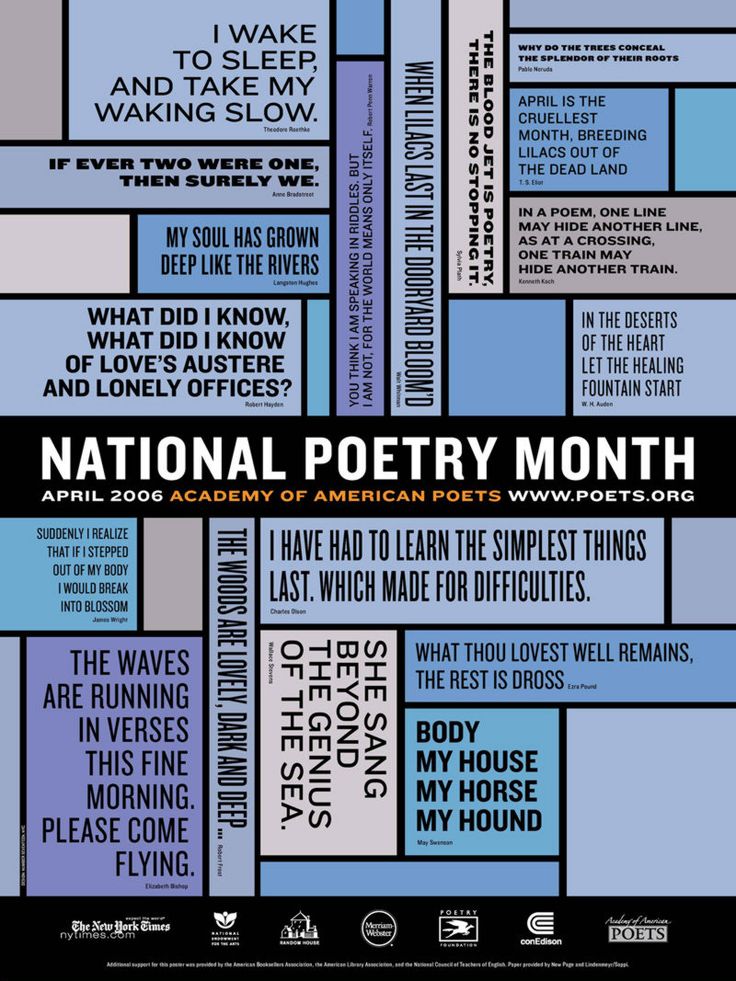
    This is an old meme from National Poetry Month during 2006, but it’s quotes and “bits” are well worth sharing.

    The Academy of American Poets has wonderful suggestions for celebrating National Poetry Month 2022.

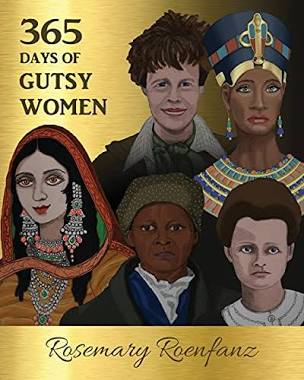
    Recently I finished this fine collection of brave and “gutsy” women who made a difference (See review on https://powerfulwomenreaders.wordpress.com).

    Today I want to feature a significant Chinese poet of whom I was totally unaware (Me! The Lit Major! LOL), Cai Yan, who lived from c.178 – c.249 CE and wrote her poems during the Han dynasty in China. She was the first Chinese female poet ever documented and is celebrated as one of China’s most talented poets, regardless of gender. Cai Yan could recite from four hundred ancient books and wrote the entire books down on paper for posterity. Her accomplishments are as amazing as her life story, which the author includes in her gutsy book.

    View original post 29 more words