
Today’s delightful book is
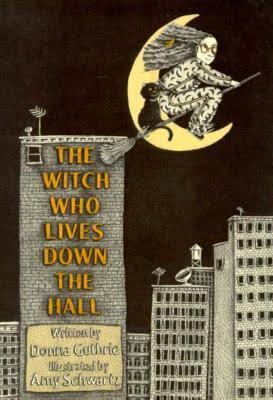
The narrator, a young boy thinks Mrs. McWee, who lives down the hall in his apartment building, is a witch. But, he’s “not so sure.” He thinks she has ESP, but “he’s not so sure.” He thinks many things and uses scant evidence to back up what he thinks, but his mom has a logical explanation for it all.
Halloween comes, and the boy goes trick-or-treating at Mrs. Mc Wee’s to find something he is sure of. You’ll never guess what it is!
Schwartz, the illustrator, uses black and white drawings spiked with Halloween orange to provide a treat for young and old alike. Enough repetition and rhythm are built in to help the youngest readers read along. It’s fun for all any time of the year.


One of my favorite types of poetry is the parody. It is easy to write and often very funny. Here is a parody over an American phenomenon :
“Stopping By Starbucks on a Snowy Evening”
“(with apologies to Robert Frost)
Whose beans these are I think I know.
They’re ground to brew and packed to go.
No one will see me stopping here.
To warm my gut with mugs of Joe.
The head barista’s feeling queer
From many shots of black liqueur.
She’s had much more than she can take
Of serving scones and coffee cake.
She gives her mocha hair a shake
To tell me there is no mistake.
The only other sound’s the sweep
Of credit cards and change she makes.
Her latte’s lovely, dark and deep,
But I have lines to rhyme, then break.
And miles to go before I wake,
And miles to go before I wake.”
(Paul Fisher)
More Poetry (from a blogger friend)
Are you human, Tris? Being up this high doesn’t scare you at all?
Tobias Eaton, Divergent
In the beginning it seems like a long climb
Where would you be if not all your stars seem to align?
Doubts run wild, and so does imagination
The thought of soaring freely fuels your passion.
You’re up in the sky
It feels like you’re motionless, yet you fly
The world’s all yours
But you’re scared of a downfall.
That high, that fading weariness
When you’ve made it to the top with baby steps
You see phosphenes after a dreamy break
You’re miles from gloomy dusk and heartache.
The wind blows and the trees rustle
Somewhere in the darkness, joy and hope tickle
You feel on top of the universe
Nothing can stop you from rising, not even the evilest curse.
You do it all for that high
The purpose that fuels your passion
View original post 220 more words
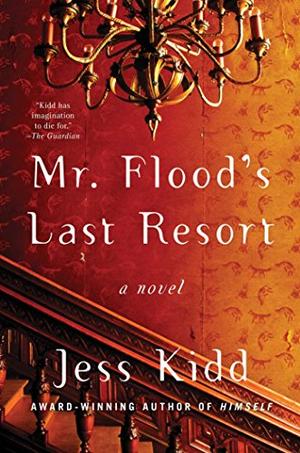
I read this book in two days–just kept turning pages to figure out the mystery at the center of the plot.
We first meet Maud Drennan, who works for a caretaker/housekeeper company, as she is tackling Mr. Flood’s falling-down, stuffed-to-the-gills house. Cathal Flood, her employer, is a belligerent curmudgeon, hoarder who is trying to outsmart his unctuous son, Gabriel Flood. Gabriel wants to put his father in a “home” where he can receive full-time attention. Instead, Cathal hires Maud to save his “estate,” Bridlemere. Maud has psychic abilities (She sees and communicates with Saints.), and she takes no nonsense from Mr. Flood. Throughout the novel, there are flashbacks to when Maud was a child when her sister “disappeared,” a mystery within a mystery.
This is a story of family love and dysfunction. In an action-packed ending, Maude shows her true colors. The ending is not totally happy, but it is satisfactory, and it hints at the possiblity of a sequel.
A secondary character must be mentioned. Renata, a drag queen and Maude’s best friend/worst enemy encourages Maude to investigate what has happened to Mrs. Flood, suspecting Cathal of the worst possible crime. What these two cohorts ferret out and act on adds hilarity and suspense at the same time.
All in all, this novel is entertaining and a darned good read.
To celebrate today, I’m featuring a poem I have always loved and have shared with students on many levels.
“Swift Things Are Beautiful”
“Swift things are beautiful:
Swallows and deer,
And lightning that falls
Bright-veined and clear,
Rivers and meteors,
Wind in the wheat,
The strong-withered horse,
The swift runner’s feet.
And slow things are beautiful:
The closing of day,
The pause of the wave
That curves downward to spray,
The ember that crumbles,
The opening flower,
And the ox that moves on
In the quest of power.”
ELIZABETH COATSWORTH
We would go on to use this poem as a model, writing poems about tiny things, large things, dull things, shiny things. This is a good “starter” for constructing a poem.

April 4-10 is National Library Week.
This past week, I made a pick up of reserved books on hold at the Alvin Library.
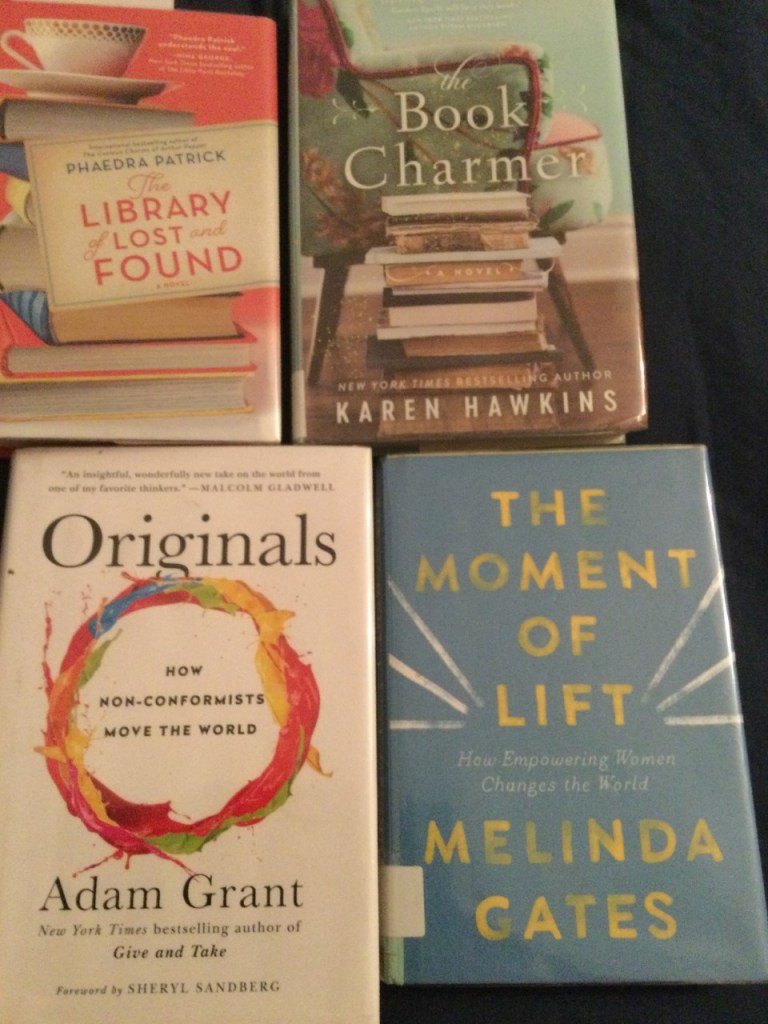
Two non-fiction books to help with my 2021 goal to read more non-fiction, and two Books about Books. That should keep me busy for a while.
“I read
In a book
Where a man called Christ
Went about doing good.
It is very discouraging
To me
That I am so easily
Satisfied
With just going about.”
(Author Unknown)

In honor of National Poetry Month,
my Tuesday Teaser comes from a great book of poetry,
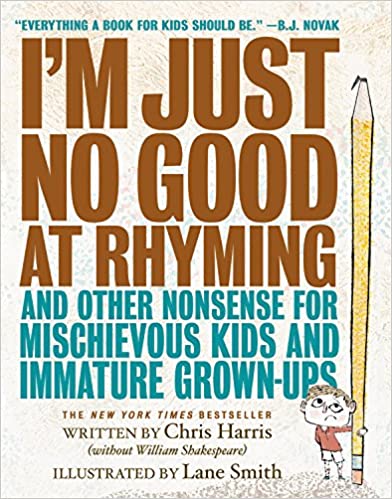
This is a parody from Robert Frost’s “The Road Not Taken”
“Two Roads”
“Two roads diverged in a wood, and I
I took the one less traveled by…
Since then I’ve been completely lost.
Thanks for nothing, Robert Frost!”

Today I received my newsletter from The Academy of American Poets in the mail. Some of the more interesting points were as follows:
“Twenty-five years ago in April of 1996, it was Academy of American Poets members who provided the initial seed money for us to announce and carry out National Poetry Month for the first time…
Over the years, our annual celebration of poets and poetry has been recognized in The New York Times, USA Today, Time, The Washington Post, People magazine , and thousands of other publications…
…the month of April has become by far the most important time of year for the release of new poetry…and sales of poetry by recognized authors and new poets alike [increase].
…events numbering in the hundreds of thousands have taken place–no exaggeration–at libraries, community centers, places of worship, at parks, town squares…all aimed at bringing poetry into the lives of local citizens and fostering a greater appreciation for beloved poets of the past as well as today’s new voices.”
The organization sent me a National Poetry Month poster, and they will be sending weekly lesson plans to 35,000 teachers nationwide. Other online programs, readings, and celebrations will be held as well.
I plan to celebrate National Poetry month with a poetry contest in my Advanced Writing class and to personally read a new poem each day of the month. Let me share today’s with you. This is from Margaret Atwood’s Dearly, her latest collection of poems:
“Ghost Cat”
“Cats suffer from dementia too. Did you know that?
Ours did. Not the black one, smart enough
to be neurotic and evade the vet.
The other one, the furrier’s muff, the piece of fluff.
She’d writhe around on the sidewalk
for chance pedestrians , whisker
their trousers, though not enough when she started losing
what might have been her mind. She’d prowl the night
kitchen, taking a bite
from a tomato, a ripe peach there,
a crumpet, a softening pear.
Is this what I’m supposed to eat?
Guess not, but where?
Then up the stairs she’d come, moth-footed,
owl-eyed, wailing
like a tiny, fuzzy steam train: Ar-woo! Ar-woo!
So witless and erased. O who?
Clawing at the bedroom door
shut tight against her. Let me in,
enclose me, tell me who I was.
No good. No purring. No contentment, Out
into the darkened dining room,
then in, then out forlorn.
And when I go that way, grow fur, start howling,
scratch at your airwaves:
no matter who I claim I am
or how I love you,
turn the key. Bar the window.”
Margaret Atwood’s voice is a strong one in her poems. Often her “messages” or thoughts are not what we expect, but she is always unique, a voice to be heard. Thanks to my friend, Mary Allen, who gave me a signed copy of this 2020 collection of Atwood poems. I hope to read the entire collection this month to celebrate National Poetry Month, 2021.


 powerfulwomenreaders