I started my virtual trip to NYC with a photo of my two New York mugs. I bought another at Goodwill yesterday, one I would have bought had I visited the Statue of Liberty in person.
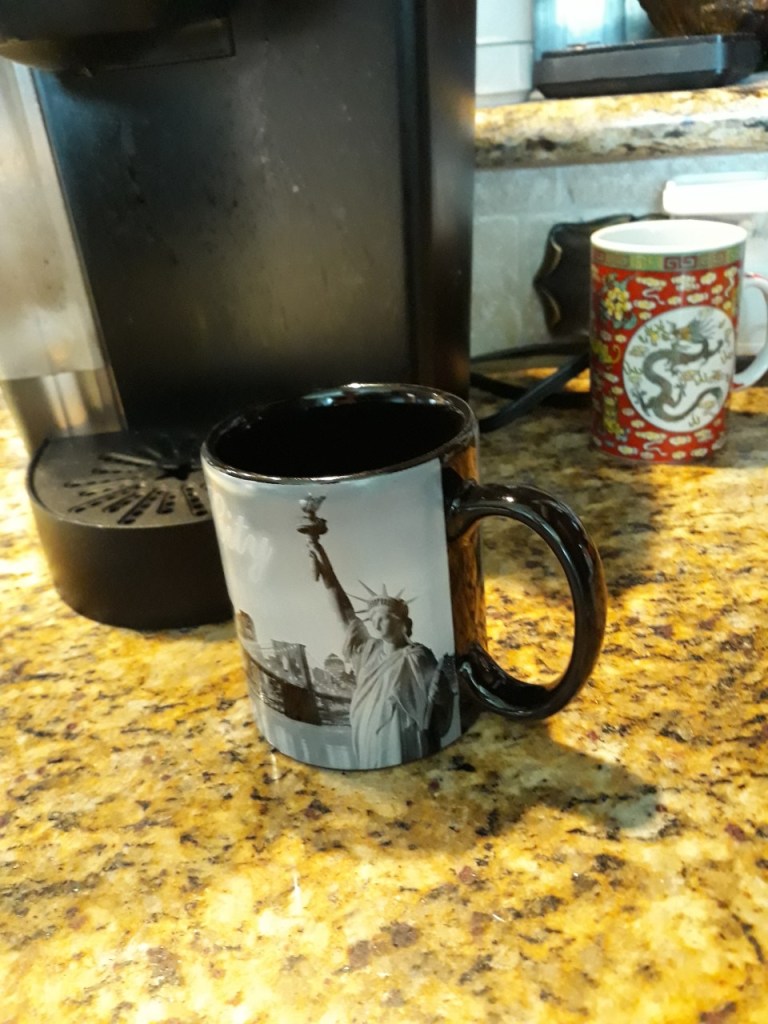
This brings my New York mug collection to three.
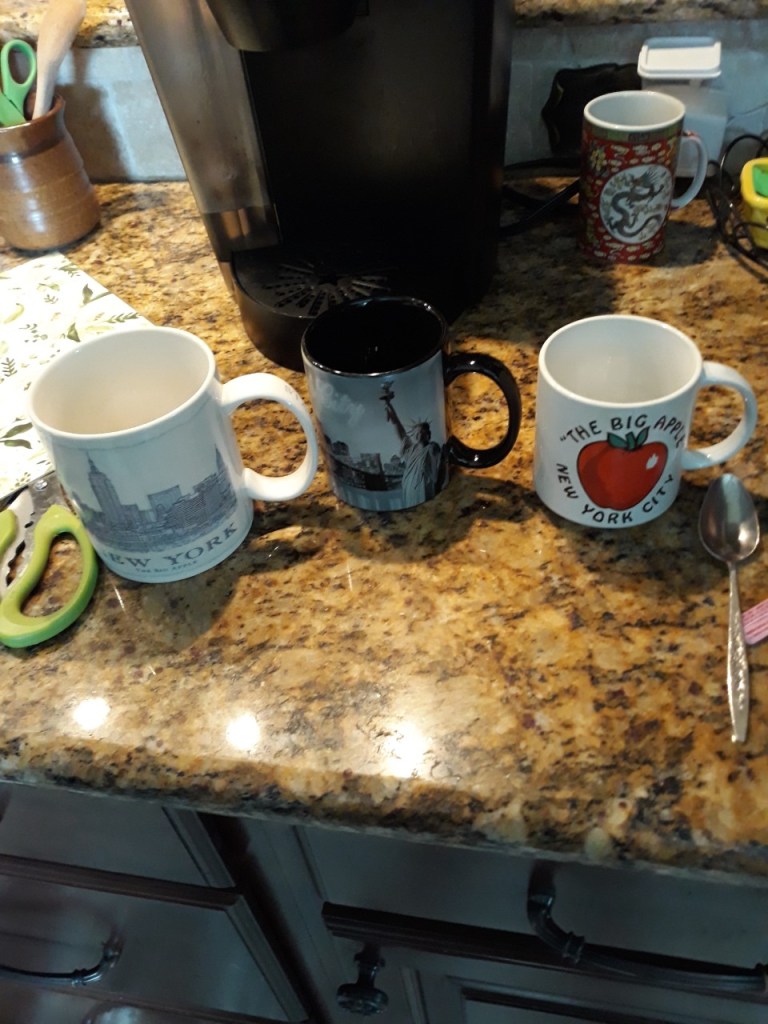

I started my virtual trip to NYC with a photo of my two New York mugs. I bought another at Goodwill yesterday, one I would have bought had I visited the Statue of Liberty in person.
This brings my New York mug collection to three.
In honor of National Poetry Month, today’s Saturday Mornings for Kids will feature renowned children’s poet, Shel Silverstein.
My introduction to Silverstein came as a sixth grade teacher, who after seeing a review of Light in the Attic in the Houston Chronicle, asked for a copy for her birthday so she might share it with her students.
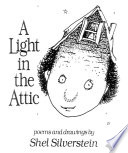
Not long after, Silverstein published Where the Sidewalk Ends, and I treated myself to a copy. This was followed by a purchase of Falling Up.
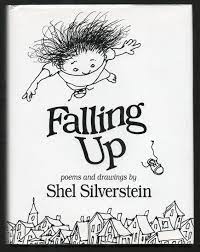
Becoming enamored more and more by Silverstein’s poetry, I took the poetry collections to school, introduced them, and read several poems aloud, sharing the illustrations like a teacher of much younger students might, holding up the book and panning around so all could see them. Afterwards, I would place the books on a side counter, encouraging students who had finished their work to go over to the counter and look at/read them. We even started a “game” where students would take a fancy bookmark left in each book and move it to one of their favorite poems. I think the students were as interested in each other’s tastes in poetry as they were in the poems themselves. I began this introduction to poetry the second or third year I taught sixth graders, and continued it the remaining four years I taught sixth grade in an elementary setting.
Silverstein has something for everyone. The Giving Tree, one of his most emotional narrative poems, appeals to all ages, and touches the hearts of the hardest-hardened adults.

Since 1967, April 2nd, Hans Christian Andersen’s birthday, has been celebrated as Children’s Book Day. The purpose of this day of recognition and celebration is “to inspire a love of reading and to call attention to children’s books.”
Each week, Powerful Women Readers at https://powerfulwomenreaders.wordpress.com posts Saturday Mornings for Kids

to recommend books for children of all ages and those who read to or with them. I enjoy reading books I would love to read to a sixth or seventh grade class like I did “back in the day” during my first teaching career, then reviewing them for potential adoption by parents, grandparents, and teachers. I only review books I enjoy, and many turn out to be “darned good reads.”
Countries from Afghanistan, Argentina, Australia, Camaroon, China to Sri Lanka, Ukraine, the United Arab Emirate, the U.S. plan virtual festivals, Zoom readings and talks, book distributions and presentations on this…
View original post 19 more words
Formerly Autism Awareness Day, this day of recognition stresses acceptance, not just awareness.
Interestingly enough, I did not find a logo/meme with the word “acceptance” in the place of “awareness.” I don’t know if this was an oversight, or if I just didn’t look hard enough. The whole month of April is dedicated to learning about and, this year, going a step further and interacting with, autistic friends and acquaintances. Instead of just saying to oneself, “Oh, there’s Charlie; he’s autistic,” people are being encouraged to go over to Charlie, greet him in a non-threatening manner, and begin a friendship/relationship with him. It is not enough to be aware; one must accept.
Last year, I used the month of April to explore “All Things Autistic” on this blog. There are references to autistic students I’ve taught, friends who are “on the spectrum” and reviews of books I read for the “project” which featured an autistic character. Since then, I have been fascinated by the autistic mind and would love to know more. Even better, I wish I could get to know an autistic individual in a “close up and personal” way. I attended two virtual lectures (power point presentations) given by psychology students as part of their course work last semester and this semester, and I learned a good deal of practical advice onNational dealing with autistics. I’ve only had three students who fell under this category with the disabilities office, but they were some of the most rewarding teacher-student relationships I’ve formed in my thirty plus years at my university. I would love to be privy to information from autistic students themselves on what teachers/professors should and should not do. I am sure the replies would be as diverse as are the people classified as autistic.
What are your experiences with autism? Do you have any interest in the topic? Thoughts?
No April Fools about it, April 1st marks the beginning of National Poetry Month.
National Poetry Month is finally here! I have been looking forward to it all semester. Other than writing and/or analyzing love poems for extra credit back at Valentine’s we have concentrated on argumentative writing for an academic audience. This month my students will be able to flex their creative muscles.
I will celebrate on other levels as well. The weekend after Easter weekend, I will host a “Celebrate All Things Bookish” in my yard with free books, plenty of cookies and lemonade, and a drawing for journals and a gift card to Half-Price Books. Hopefully, it will be fun for all. I am inviting my neighbors, friends, and all the patrons of my Little Free Library. Maybe I will have someone read a poem in honor of National Poetry Month, or better yet, hold a Limerick contest. I can hardly wait for this month to get underway.
There are times when a poet must make a stand and say, “This has happened without my cognisance and I will not accept it!” Today has not been the best of days. Today I got a note from a patron. Common enough, especially from her, as she was always quick to praise, swift to encourage. But today the note had a bitter flavour. She was sitting awaiting death. A week? Longer?
And what can a poet do? A poet can protest, a poet can stand tall and say firmly that this will not do. A poet can bang the table with his wine glass obvious of the fact it has shattered and the pieces lie glistening but incoherent, shards of dreams never now to be dreamt.
Others have known Sue for longer than I, others will doubtless feel the grief more keenly, will mourn longer, but my job as a…
View original post 431 more words
After hearing Neil Gaiman interviewed via Zoom live at this year’s ComiCon sponsored by our Brazoria County Library System, I decided to renew my acquaintance with the author I often use in class with his video address, “Make Good Art.”
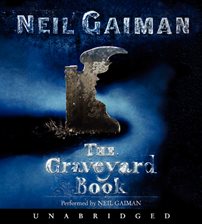
One of the things I did was listen to Gaiman’s The Graveyard on Hoopla, which is also provided by my county library system.
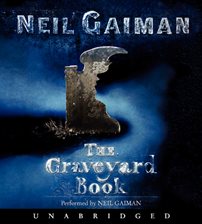
A child who survived the brutal murder of his parents and sister, escapes the sadistic killer by tottering into a nearby graveyard. The toddler is protected and adopted by the dead who inhabit the abandoned graveyard. He is named, “Nobody”. The murderer known as “Jack” searches ruthlessly for the child, but is put off and led astray by the ghost-like graveyard’s tenants.
What happens to the child, and to Jack fleshes out the story, which is narrated by the author himself. Gaiman’s tone and voice are pleasing and do a lot towards creating the supernatural “feel” of this strange tale.
I was introduced to Gaiman’s work through the novel, Everywheres, which My Better Half and I both read one summer. I then read all the Gaiman graphic novels our local library owned, enjoying The Sandman the most. After Gaiman won an Oscar for his animated film, Coroline, I took a look at it, and surprisingly enough found a tale teens often identify with, failing to, then appreciating their parents in much the way young Coroline came to do. It is a strange tale from a strange and highly creative mind.
I will probably follow Gaiman to an extent as a very creative individual and an outstanding author for a long time.

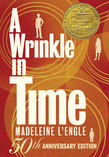
These three were all done, and I reviewed them as a trilogy on PWR.
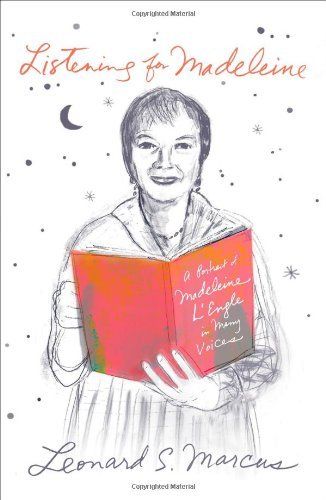
This lovely portrait of Madeline L’Engle

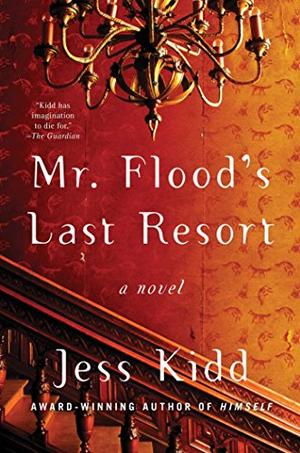

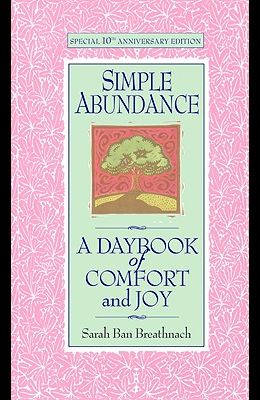

This is a book I started (ordered it from a second hand online source) but with library books demanding attention and having due dates, I have had to put it aside. It is a most enjoyable novel. I intend to finish it this coming week.
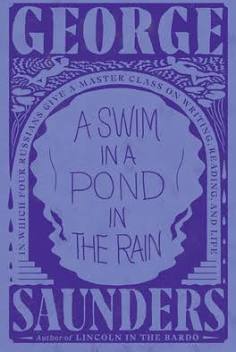
I read the first two stories and explications/analyses in this remarkable book, and my time with it expired. I marked my notes and took it back to the library, but I have every intention of checking it out again (maybe not right away, but when school grading calms down) because it satisfies the Lit major in me. I read slowly and savored every page of the two stories and the pages of analysis on each.
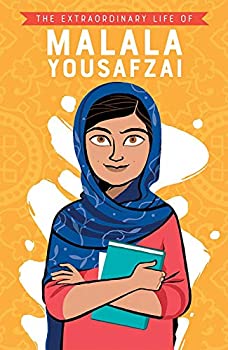
Today’s recommendations both come from a Kane Miller EDC Publisher’s “Extraordinary Life” series of very readable, fantastically illustrated biographies.
The first is The Extraordinary Life of Malala Yousafzai, written by Hiba Noer Khan and illustrated by Rita Petruccioli. It pulls no punches, and covers the attack on Malala in a straight-forward manner without making that the only thing about her life.
The second is a biography of Neil Armstrong , The Extraordinary Life of Neil Armstrong written by Martin Howard and illustrated by Freida Chiu. Chronicling the life of the first man to step foot on the moon, this biography describes Armstrong’s life as a “nerd,” and gives hope to young nerds everywhere.
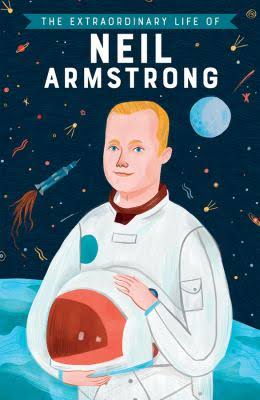
Both of these books are wonderfully written and illustrated and should interest kids from 8 to 14. This reviewer, although an adult learned many things about the two individuals from reading their biographies. I ordered these books from the publisher for young friends, and will look for more biographies in this series. These are darned good reads for kids!




 powerfulwomenreaders