
This book was published back in 2017, and I have “been meaning to read it” since then. I heard so much about it, not all of it good, BTW. It definitely is different. I finished it the weekend before this one that just passed.
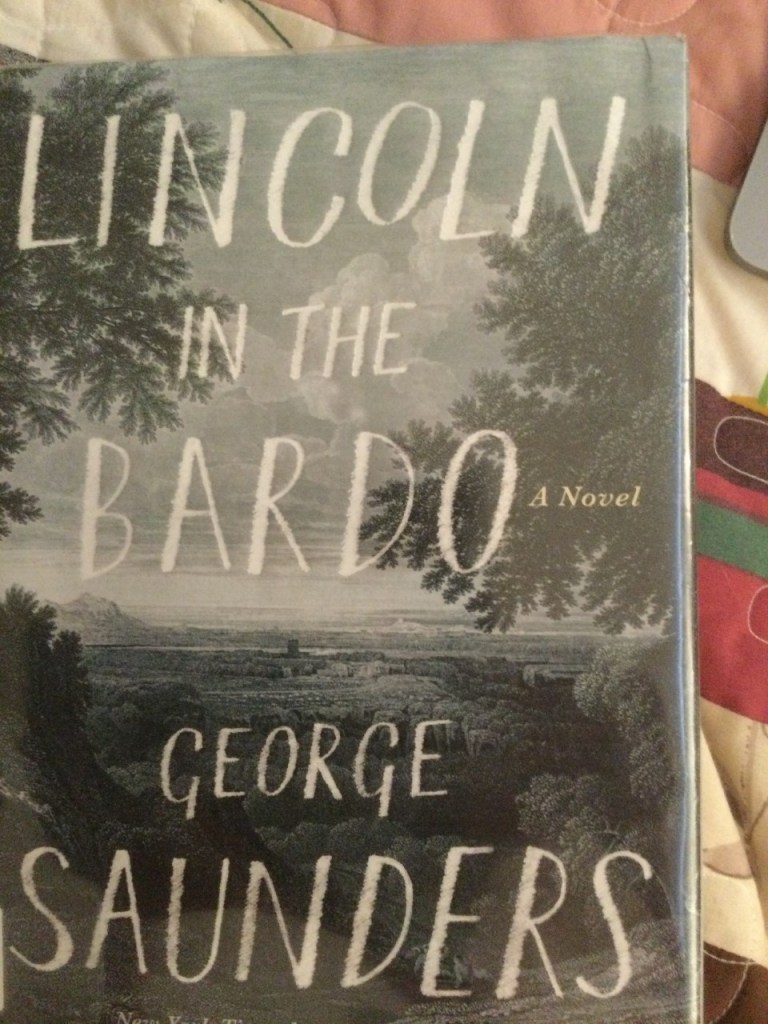
The back cover describes the novel as “original, transcendent, and moving,” and it certainly is. The setting, one year into the Civil War, in a graveyard with its (trapped) inhabitants providing a chorus of voices, reminiscent of a Greek chorus in classical plays. Lincoln’s son, Willie, the one most like him and his favorite has died at age eleven. Lincoln’s grief is heroic and utterly devastating. Newspapers of the day report that Lincoln actually did return alone and grieving to the crypt where his son’s body lay, and at one point (at least) took the body from the coffin and cradled it against his own body. There is enough fact and truth in the story, with enough imagination provided by comments of the dead in the cemetery to describe marvelously Lincoln’s emotions and actions against the background of his grief over the splitting of the country of which he was President, and the war that pitted brother against brother.
The format of the book is also very different.
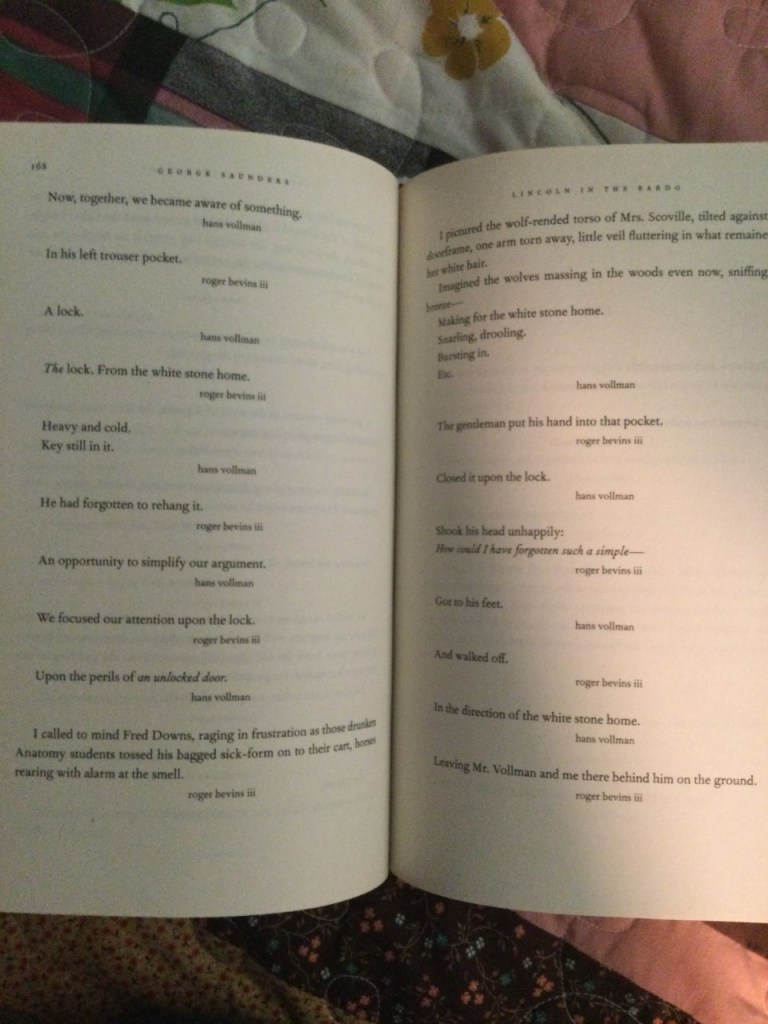
Pages are divided into quotes, some from historical statements, documents, and journals of the time; others from “quotes” by imaginary residents of the graveyard, who are all rooting for the young child to find peace in the afterlife. (The Bardo is a Tibetan traditional state after death, a kind of purgatory or waiting place. ) They are also aware of the grief and depressed state of the President, for whom they want peace and comfort. Both the format and the theme are highly imaginative/original, presenting a “kaleidoscopic state,” a disorganized tangle of living and dead, historical and invented by the author’s imagination. The philosophical question Saunders poses is, “How can/should we live and love when we know that everything we love must end?”
SPOILER ALERT–You may wish to skip these last few lines.
The ending of this emotionally written book is extremely satisfying. We see the boy’s transition into the afterlife and Lincoln’s easing of the great grief and guilt he experienced as he resolves to continue the fighting of the war he believed in so strongly at its inception.
It turned out to be a “reading experience” for me. I highly recommend it.


 powerfulwomenreaders
Leave a comment