
PWR reserves Saturday mornings for reviews and mentions of kids’ books, much like TV programming of the 50s and 60s did. Today’s picture book is a controversial, sometimes banned book.

When I read it, I was impressed with the life lesson it presents that sometimes it takes hard times, or in this case horrific events to bring people together and to build community. Basically, the book describes an African American boy and his mother standing at their apartment window, backlit by smoke and flames, observing rioting in their neighborhood. Forced to evacuate the building, then encounter their Asian American neighbor with whom they never had got along. The boy keeps asking neighbors if they had seen his cat, who disappeared soon after the fire started. When he asks the testy Mrs. Chin, her cat has disappeared as well. When the fire is over and the tenants are allowed to return, the two find their cats, who fought constantly before, safely curled up asleep together. And after the terrible experience of the fire, both families are also reconciled like the cats.
A lovely story, right? WRONG! Imagine my surprise when I googled the title to find an article titled, “Smoky Night, A Misguided Effort to Help Kids Understand the Rodney King Riots.” Look at this illustration from the picture book:
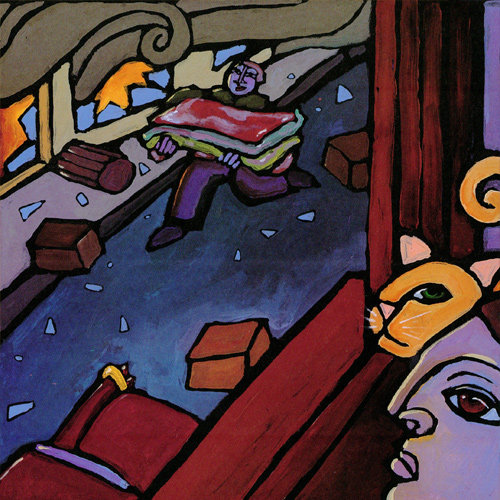
With what has now been called the “Rodney King riots” in the background, the boy asks his mom why the people are doing what they are doing, and she answers, “People get angry. They want to smash and destroy. They don’t care anymore what’s right or wrong…After a while it’s like a game.” This sounded to me like a good explanation for a little boy. However, the article mentioned above criticized this explanation because it was a white woman writing the book who did not understand the underlying causes of the riots, who indirectly described all black neighborhoods as “bad neighborhoods.” This short-sighted reason caused Smoky Night to be banned and pulled from school library shelves. Really?
To me the excellence of the illustrations and the message of the book overall far outweighs any criticisms of the book. Depending on how you feel about social justice issues, you may want to read this book with your child/grandchild. I did enjoy the book.


 powerfulwomenreaders
Leave a reply to Mae Sander Cancel reply